
Laser Skin Resurfacing London
Laser Skin Resurfacing
Laser skin resurfacing is an advanced treatment designed to improve the quality, texture, clarity, and overall appearance of the skin. In my practice, this is performed using ablative CO2 laser resurfacing with the Deka Pro system. It is one of the most effective ways to improve skin quality, particularly where there are fine lines, wrinkles, sun damage, rough texture, enlarged pores, and selected superficial scars.
When I assess facial ageing, I often think in terms of three key components: skin quality, volume loss, and facial laxity. These changes occur together over time, which is why the most refined facial rejuvenation often comes from treating them in a thoughtful and comprehensive way.
Laser skin resurfacing addresses the skin quality component very effectively. It can be performed as a standalone treatment for patients who wish to refresh and improve the skin itself, or it can be combined with procedures such as a deep plane facelift, eyelid surgery, brow lift, or facial fat grafting. In these cases, resurfacing helps improve the surface quality of the skin so that it better matches the deeper structural rejuvenation achieved through surgery and volume restoration. The result is often a more complete and harmonious rejuvenation, with better skin quality, improved contour, and a fresher overall appearance.
Prices start from £7,500
Laser Skin Resurfacing London
The Procedure: At a Glance
Procedure Length:
Typically 30 minutes to 1.5 hours
Hospital Stay:
Typically a day case procedure.
Anaesthesia:
Local anaesthetic, sedation, or general anaesthetic depending on the area treated.
Downtime:
Usually around 7 to 14 days, depending on the depth and intensity of treatment.
Showering:
Usually possible after 24 to 48 hours, depending on the treatment area.
Sleeping:
Sleep on your back with your head elevated during the initial recovery period to help minimise swelling.
Smoking:
Should be avoided at least 4 weeks before and 4 weeks after surgery.
Direct Sun Exposure:
Avoid on surgical areas for at least 6 weeks. Always use a high SPF outdoors.
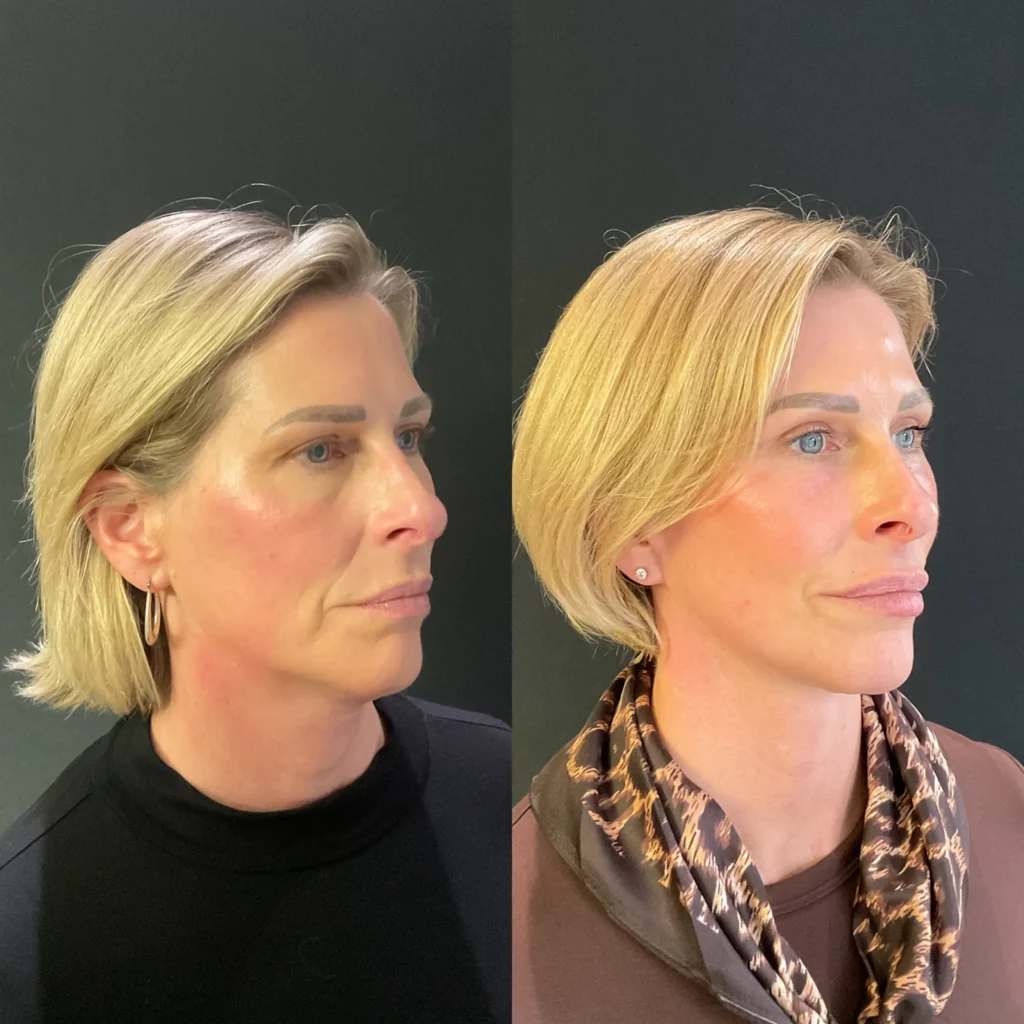
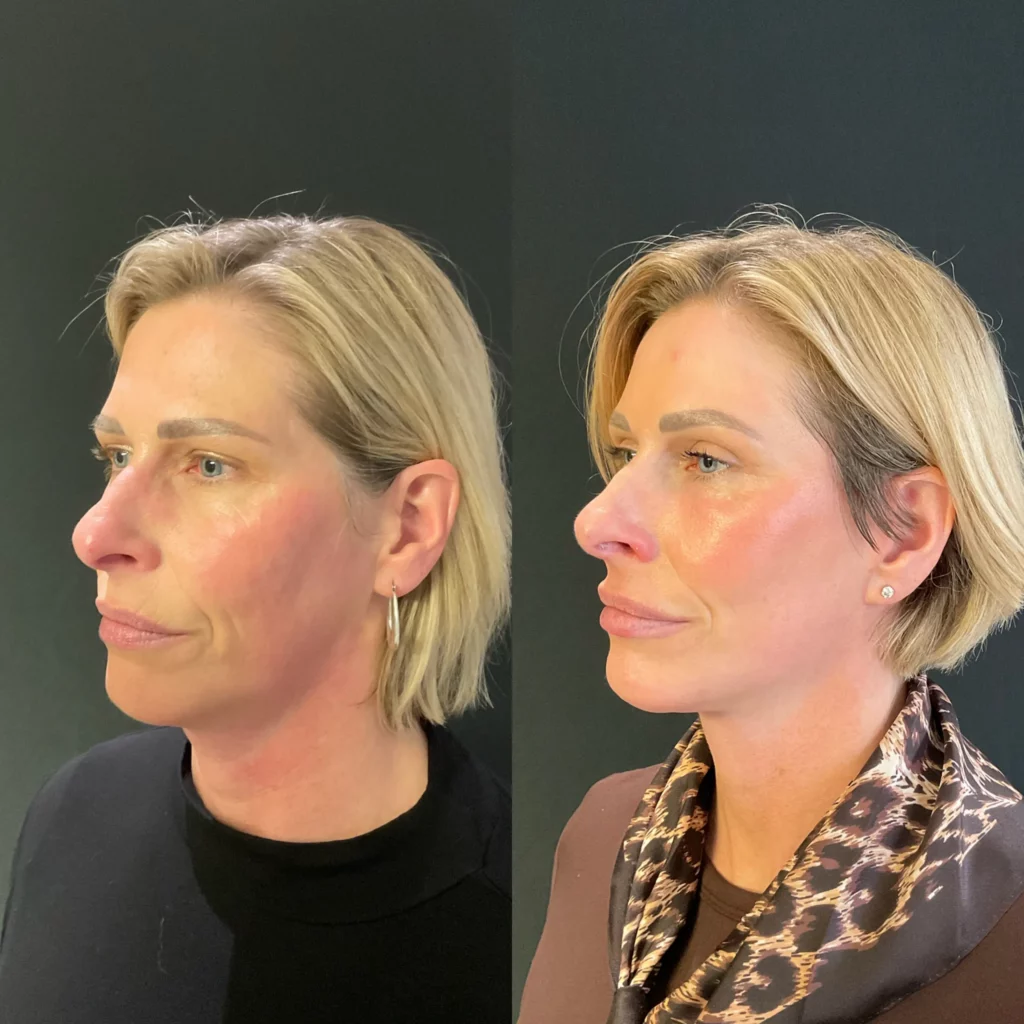
Before and After Laser Skin Resurfacing



Benefits of Laser Skin Resurfacing
Laser skin resurfacing is one of the most effective ways to improve the surface quality and visible age-related changes of the skin. By removing damaged outer layers and stimulating collagen remodelling beneath the surface, it can produce meaningful improvement in texture, tone, lines, and overall skin refinement.
One of the key strengths of this treatment is that it does not simply refresh the skin superficially. CO2 laser resurfacing, in particular, can also produce a meaningful tightening and rejuvenating effect through collagen stimulation, which is why it can be such a valuable part of a broader facial rejuvenation strategy.
For the right patient, laser skin resurfacing can:
- improve fine lines and wrinkles
- improve sun damage and photoaged skin
- refine uneven texture and roughness
- improve certain pigmentation irregularities
- reduce the appearance of enlarged pores
- improve acne scarring and selected superficial scars
- brighten and refresh tired, dull skin
- stimulate collagen remodelling for a smoother, tighter skin surface
Who Is A Good Candidate for Skin Laser Resurfacing?
Suitability depends on skin type, skin quality, degree of ageing, tolerance for downtime, and whether the treatment is being performed alone or alongside other facial procedures.
Laser skin resurfacing is often most useful for patients who:
- have fine lines, wrinkles, or crepey skin
- have sun damage or uneven skin texture
- want to improve overall skin quality, brightness, and refinement
- have acne scarring or certain superficial scars
- want a more powerful resurfacing treatment than lighter non-ablative options
- are looking to complement facelift surgery, eyelid surgery, or volume restoration with improvement in skin texture and tone
Patients with more advanced facial ageing often benefit most when laser skin resurfacing is used as part of a broader rejuvenation plan. Surgery may address facial laxity, volume replacement may address deflation, and resurfacing can address the skin envelope itself. This more comprehensive approach can create a more harmonious and natural-looking result.
Laser Skin Resurfacing Vs Other Treatments
Both CO2 and erbium are ablative resurfacing lasers, meaning they remove damaged layers of skin and stimulate renewal. Both can be highly effective in the right patient, but they differ in the balance between ablation and thermal effect.
Erbium laser resurfacing is often associated with more superficial ablation and less thermal injury to surrounding tissue. This can make it attractive in selected patients who want a lighter treatment or a potentially shorter recovery. CO2 laser resurfacing generally offers:
- more collagen stimulation
- greater thermal effect and tightening
- better improvement in deeper lines and more advanced photoageing
- a stronger resurfacing effect in selected patients
- excellent synergy with surgical facial rejuvenation
For patients seeking more meaningful rejuvenation of skin quality, particularly where there is deeper wrinkling, sun damage, crepey skin, or a desire for a more transformative result, CO2 laser resurfacing often offers important advantages.
Laser Skin Resurfacing vs Other Treatments
There is no one-size-fits-all skin rejuvenation treatment. The correct approach depends on skin quality, degree of ageing, tolerance for downtime, and the type of result required.
CO2 Laser Resurfacing vs Erbium Laser Resurfacing
Both CO2 and erbium are ablative resurfacing lasers, meaning they remove damaged layers of skin and stimulate renewal. Both can be highly effective in the right patient, but they differ in the balance between ablation and thermal effect.
Erbium laser resurfacing is often associated with more superficial ablation and less thermal injury to surrounding tissue. This can make it attractive in selected patients who want a lighter treatment or a potentially shorter recovery.
CO2 laser resurfacing generally offers:
– more collagen stimulation
– greater thermal effect and tightening
– better improvement in deeper lines and more advanced photoageing
– a stronger resurfacing effect in selected patients
– excellent synergy with surgical facial rejuvenation
For patients seeking more meaningful rejuvenation of skin quality, particularly where there is deeper wrinkling, sun damage, crepey skin, or a desire for or a desire for a more transformative result, CO2laser resurfacing often offers important advantages.
Laser Skin Resurfacing vs Non-ablative Treatments
Non-ablative lasers and other energy-based treatments can improve the skin with less downtime, but they are generally less powerful than ablative CO2 resurfacing. They may be suitable for patients who want more modest change and a lighter recovery, but they usually do not provide the same degree of resurfacing, collagen remodelling, or improvement in more advanced skin ageing.
Laser Skin Resurfacing vs Surgery
Laser skin resurfacing improves skin quality, but it does not reposition deeper tissues or remove significant excess skin. For that reason, it is not a replacement for facelift surgery in patients whose main issue is facial descent, jowling, or neck laxity. Instead, it is often best thought of as treating one important component of facial ageing: the skin itself.
– laser skin resurfacing improves skin texture, lines, and sun damage
– volume restoration improves hollowing and deflation
– facelift surgery improves facial laxity and descent
When these elements are combined thoughtfully, the result can be a more comprehensive and natural-looking facial rejuvenation.
Procedure Overview
Every treatment plan is individual. In general, laser skin resurfacing involves:
- careful skin assessment and treatment planning
- cleansing and preparation of the skin
- delivery of the laser in a controlled and tailored pattern depending on the treatment depth and area
- application of appropriate post-treatment skincare and healing support
- detailed aftercare guidance and follow-up
Treatment may be focused on specific areas, such as around the mouth or lower eyelids, or performed more comprehensively across the full face depending on the indication. It may also be combined with other facial rejuvenation procedures where appropriate.
Recovery
Recovery varies according to the depth of treatment, the area treated, and whether laser skin resurfacing is performed alone or with surgery.
In general:
- the skin will feel hot, tight, and sensitive in the early healing phase
- redness, swelling, and a raw or bronzed appearance are expected initially
- the superficial healing phase usually occurs over approximately 7 to 10 days in many patients
- redness can persist for several weeks and gradually fades over time
- skin quality continues to improve as collagen remodelling develops over the weeks and months after treatment.
You will be given detailed aftercare instructions, including skincare, moisturising, sun avoidance, and follow-up support during recovery.
Procedure Risks & Complications
All procedures involve risk. During consultation, risks will be discussed carefully, and a tailored plan is made to reduce risk wherever possible.
Potential risks include:
- redness and prolonged erythema
- swelling
- infection
- delayed healing
- temporary or persistent pigmentation change
- milia or acneiform eruption during healing
- sensitivity and irritation
- scarring, which is uncommon but possible
- asymmetry or uneven healing
- need for further treatment or revision treatment

Book your consultation
If you would like to discuss this procedure in detail and understand if it’s the right procedure for your goals, book a consultation with Mr Kshem Yapa.
“I feel fantastic, look fantastic and natural. I can’t praise Mr Yapa enough. From the moment I met him I felt I am in good hands. I had many questions and he was always happy to provide answers and advice. He is very knowledgeable, professional and caring for his patients.”
DEEP PLANE Facelift patient
“Fantastic experience that I couldn’t fault what so ever! From the consultation to the operation to the anaesthetist and to the after-care has been nothing but exceptional, Dr Yapa an amazing Surgeon who achieves exactly what you ask for. I would have no hesitation what so ever recommending him to anyone.”
Browlift and upper blepharoplasty patient
“Mr Yapa understood what I wanted and went above and beyond to make it happen. During our consultation, I wanted a slight change in my nose, not to be a swoop just straight and he did just that. He understood what I wanted and just went above and beyond for it. This beyond what I expected. He is an amazing, empathetic surgeon.”
Rhinoplasty patient
“Kshem Yapa is a brilliant surgeon and has built a diligent and thoroughly professional team around him. Deep plane facelift surgery is a daunting experience and he and his colleagues were reassuring, pragmatic and kind throughout the whole process. If you are looking for a specialist facial plastic surgeon I highly recommend him and his team. “
DEEP PLANE FACELIFT patient
As seen on




Laser Skin Resurfacing CONSULTATION LONDON
Book Your Appointment
Mr Yapa approaches every consultation with the time and honesty that this decision deserves. He will assess your concerns, walk you through the options available, and give you a clear, realistic picture of what laser skin resurfacing could achieve for you. If a different approach would serve you better, he will say so.
2026 consultation dates are now available to book online, costing £250 (redeemable against your surgery should you wish to go ahead). You can join our waiting list to be notified when new dates become available. For general enquiries or to learn more about our procedures and services, please use the form below to request a callback.
