
Short Scar Neck Lift London
Short Scar Neck Lift
(Short Scar Deep Neck Lift)
The short scar neck lift is a deep neck lift performed through shorter, carefully placed incisions. Although it is sometimes referred to as a mini neck lift, that description can be misleading. The work carried out beneath the skin is the same deep neck correction Mr Kshem Yapa performs during a full neck lift; what is reduced is the length of the scar, rather than the extent of the surgery.
As we age, changes beneath the skin can soften the definition of the jawline and create fullness or sagging beneath the chin. These changes are not always caused by excess skin alone. Fat beneath the platysma muscle, changes in the position of the muscle itself, and in some patients, enlarged or low-lying submandibular glands can all contribute to a heavier or less defined neck. Because these structures sit deeper within the neck, lifestyle changes and treatments that work only at the skin level may have a limited effect.
The short scar approach uses two discreet incisions: one beneath the chin and another around the earlobe. In a traditional neck lift, the incision around the ear extends further behind the ear and into the hairline, allowing a greater amount of loose skin to be redraped and removed. With a short scar neck lift, the incision stops around the earlobe.
Through these shorter incisions, Mr Yapa can still address the deeper structures of the neck, including reducing fat beneath the platysma, repositioning and tightening the muscle and, where appropriate, reducing the submandibular glands. This allows meaningful deep neck correction while limiting the extent of the external scars and leaving the hairline untouched.
Short Scar Neck Lift London
The Procedure: At a Glance
Procedure Length:
Approximately 2-3 hours
Cost:
Prices starting from £11,500
Anaesthesia:
General anaesthesia, most often TIVA and sedation with local anaesthesia, are suitable for selected patients.
Downtime:
Around two weeks for visible recovery, though full healing varies by individual
Hospital Stay:
Usually a day case, though an overnight stay is sometimes recommended depending on the anaesthetic and the extent of the deep neck work
Sleeping:
Sleep on your back with your head elevated for the first two weeks, and continue sleeping on your back for 4-6 weeks
Showering:
Permitted after 48 hours, taking care to avoid direct water pressure on the neck
Smoking:
Avoid for at least 4 weeks before and after surgery
Sun Exposure:
Should be limited for 4-6 weeks post-procedure, with a high SPF applied when outdoors
Driving:
Typically restricted for 1-2 weeks post-surgery and while taking pain medication
Before and After Short Scar Neck Lift
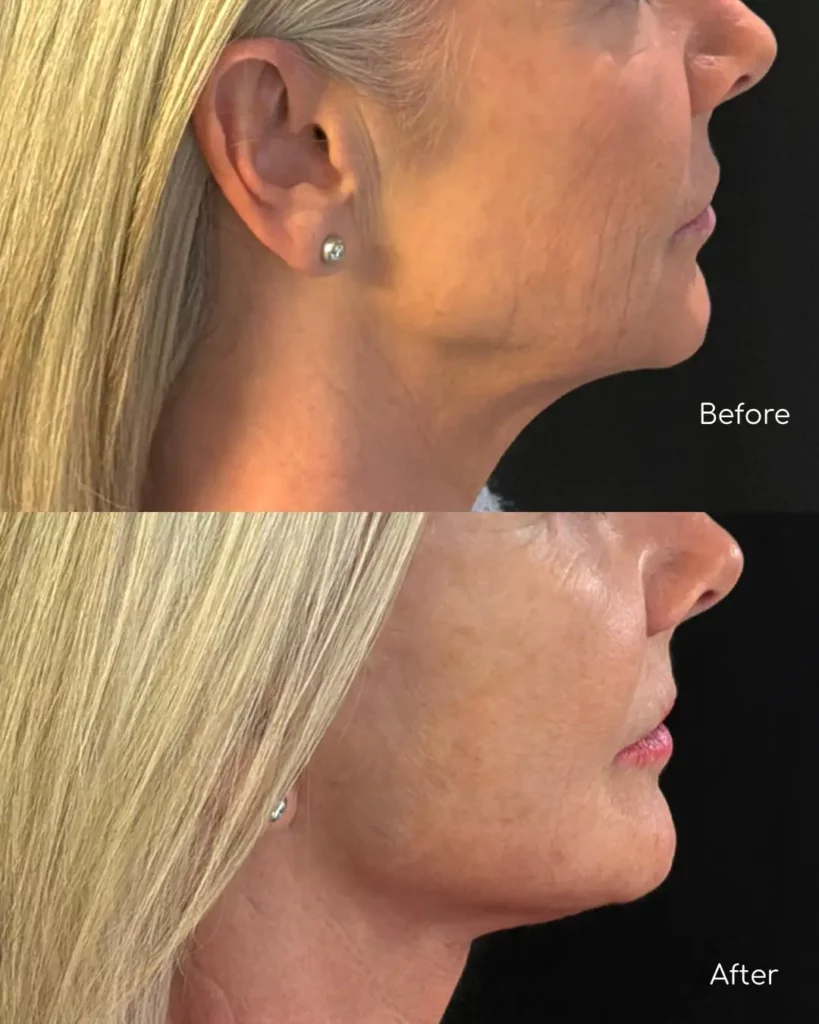

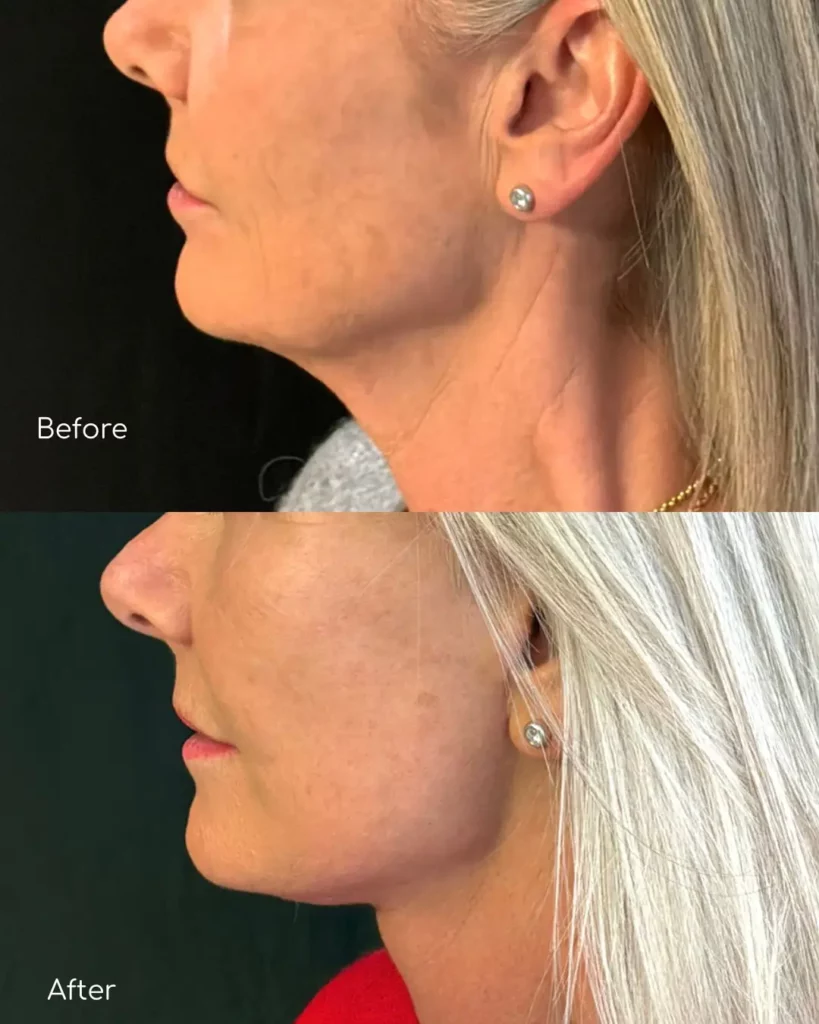

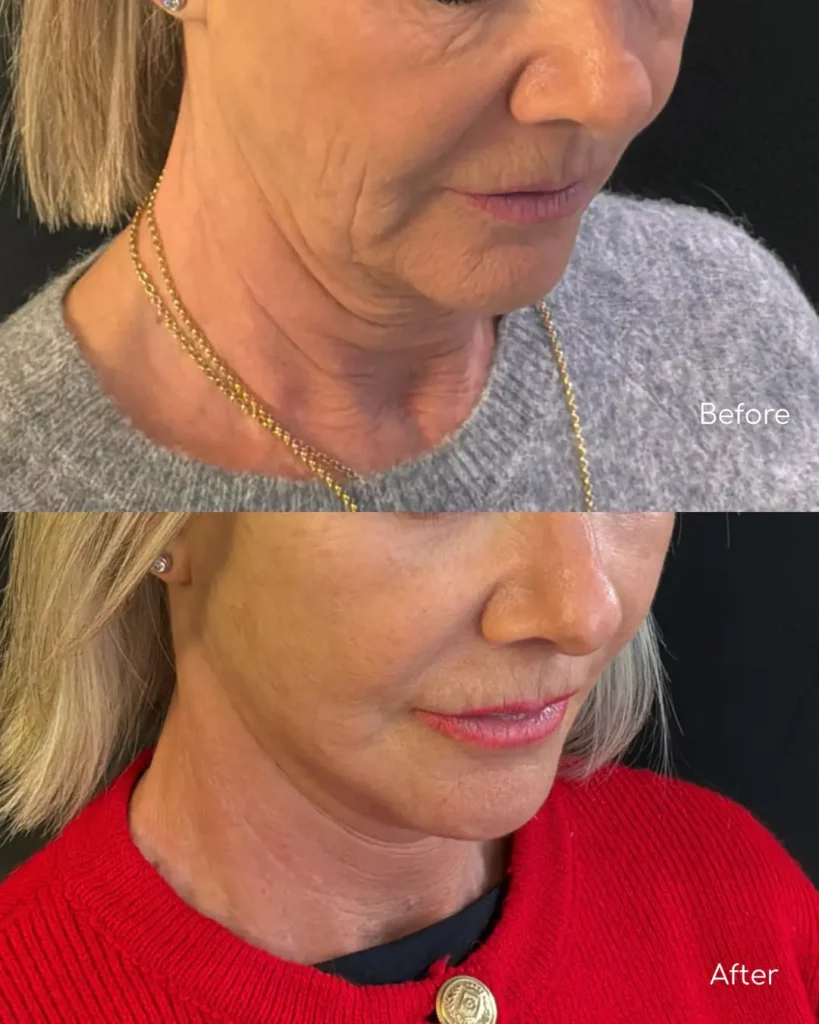

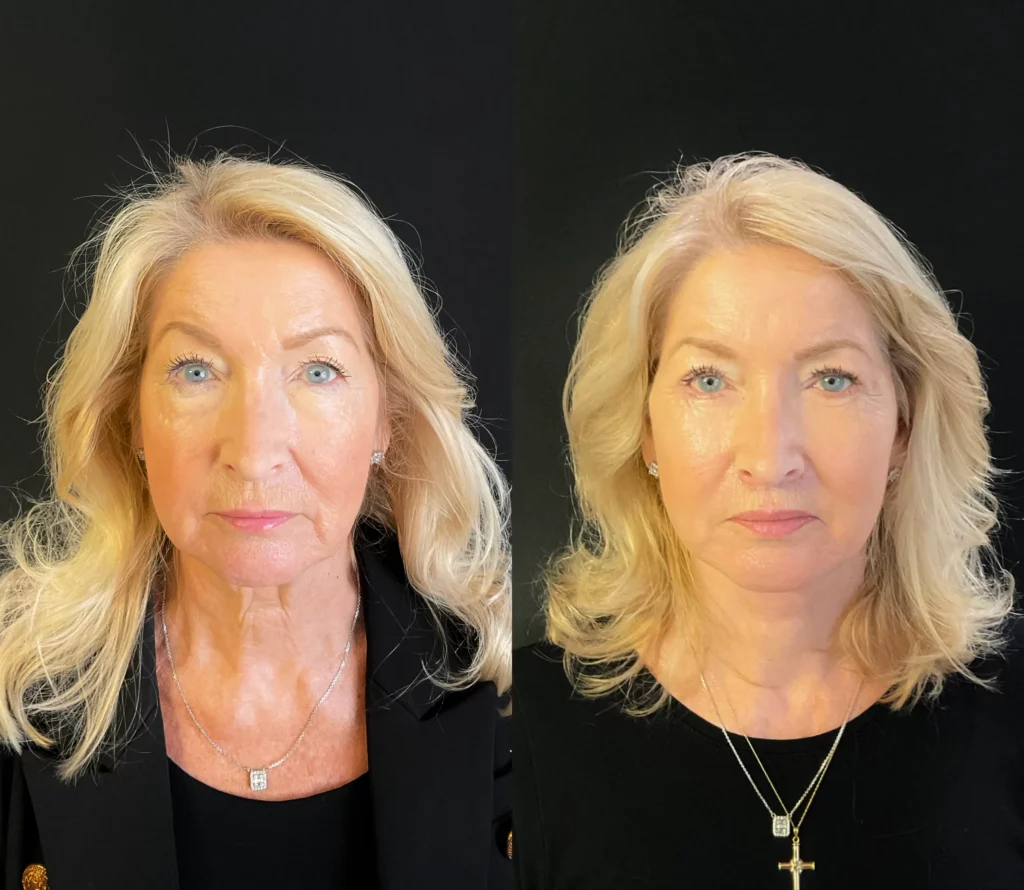

Benefits of a Short Scar Neck Lift
A neck lift is a cosmetic procedure that many patients across the UK consider as part of a wider neck rejuvenation plan. The short scar neck lift suits patients who need the deep structures of the neck properly addressed, but whose skin laxity is limited enough to be redraped without extending the scar behind the ear and into the hairline.
Full Deep Neck Correction Through Short Incisions
Working beneath the chin and around the earlobe, Mr Yapa can treat fat beneath the platysma, the platysma muscle itself and, where relevant, the submandibular glands. This goes considerably further than chin and neck liposuction, which removes only the fat above the muscle and leaves the deeper causes of a full neck untouched.
Hidden, Minimal Scarring
The incisions sit beneath the chin and in the natural crease around the earlobe, where they are discreet once healed. Because nothing extends into the hairline, the natural line of the jawline and neck is preserved even with the hair worn up or pulled back.
A Contained Recovery
Because less skin is lifted, bruising and swelling are generally more contained than after a full neck lift, and most patients return to their routine sooner. The deep work, however, is the same, and recovery should be planned for properly rather than compressed.
Day Case in Most Cases
Many patients go home the same day. An overnight stay is sometimes recommended depending on the anaesthetic used, the extent of the deep neck work and individual circumstances.
Natural-Looking Results
The procedure restores a smoother, youthful neck and jawline definition, producing a result that looks rested rather than altered. Because the correction is made in the deep layers rather than by tightening skin, the neckline sits naturally and holds its shape as it settles.
A Route to Facial Rejuvenation With No Scars in Front of the Ear – “Scarless facelift”
For selected patients, the short scar neck lift can be combined with an endoscopic brow and midface lift, carried out through small incisions hidden within the hairline. Together, these elevate the cheek and midface, soften the nasolabial folds, reset the brow position and restore the neck and jawline – with no incision in front of the ear at all. For patients who wear their hair up, or who are particularly concerned about visible facelift scars, this is a genuinely valuable option. Mr Yapa will advise whether your anatomy suits this combination.
Short Scar Neck Lift Procedure
Every short scar neck lift is planned around the patient’s anatomy and goals, and depending on what is agreed during consultation. It is usually performed under general anaesthesia, most often TIVA, with sedation and local anaesthesia appropriate for some patients.
Anesthesia
Your consultant anaesthetist administers the agreed anaesthetic and remains with you throughout, so that the procedure is carried out comfortably and safely.
The Incisions
A short incision is made beneath the chin, and a second is placed around the earlobe. Neither runs along the full crease behind the ear or into the hairline. Both sit in natural contours and settle discreetly, remaining out of view in everyday interactions once healed.
Deep Neck Contouring
Through these incisions, Mr Yapa opens the plane beneath the platysma and reduces the fat that sits there, the layer that most often accounts for a full neck and a blunted angle beneath the chin. Where enlarged or low-lying submandibular glands are contributing to that fullness, they can be reduced at this stage. Superficial, excess fat above the neck muscles is contoured as needed for a balanced result.
Muscle Tightening
The platysma is repositioned and its edges brought together in the midline, correcting the vertical bands many patients notice, and secured to hold the new contour. This is the step that defines the angle beneath the chin and it is carried out in full, exactly as it would be in a longer scar neck lift.
Skin Redraping
The skin is then redraped over the corrected framework and a limited amount of excess removed. The short scar approach is selected when this can be achieved without extending the incision behind the ear, which is the single factor that most often determines which approach is right for a given patient.
Closure
The incisions are closed with care and a supportive dressing applied, marking the start of the recovery period.
Risks and Complications with Short Scar Neck Lifts
As with any neck surgery or other surgical procedure, the short scar neck lift carries some inherent risks, and Mr Yapa talks through these openly during consultation so patients can make an informed decision.
Bruising & Swelling
Some bruising and swelling in the neck region is expected after surgery and usually settles within a few weeks.
Scarring
Some scarring beneath the chin and around the earlobe may occur, though this typically fades and becomes less noticeable over time.
Haematoma
An occasional collection of blood beneath the skin can occur after surgery. Most resolve without further treatment, though larger haematomas may need attention from Mr Yapa.
Tightness or Numbness
A feeling of tightness or reduced sensation in the neck area is common in the early stages and generally resolves as healing progresses.
Nerve Irritation
Temporary weakness or altered sensation can follow surgery close to the nerves of the lower face and neck. This is usually a bruising effect that recovers over weeks to months, and lasting change is rare.
Salivary Collection (Sialocele)
Where the submandibular glands have been reduced, a collection of saliva can occasionally form beneath the skin. This is uncommon and is managed straightforwardly by aspiration. Mr Yapa will advise on dietary measures in the early weeks that reduce the risk. Dry mouth is uncommon, as the remaining salivary glands compensate.
Asymmetry
In rare cases, healing may progress unevenly on each side, creating a slight imbalance that can often be addressed during follow-up care.
Infection
There is a small risk of infection at the incision site with any surgery. Strict sterile protocols and careful aftercare help to reduce this risk.
Prolonged Discomfort
While most discomfort is well managed with prescribed medication, some patients experience mild pain beyond the initial recovery period.
Negative Anaesthesia Response
A small number of patients may experience an adverse reaction to anaesthesia, such as nausea. A thorough pre-operative assessment helps to identify any relevant factors in advance.
Short Scar Neck Lift Recovery
Recovery is generally more contained than after a full neck lift, reflecting the shorter incisions and the smaller area of skin lifted, though the deep neck work is the same, and the timeline below is best planned for rather than compressed. Mr Yapa provides a personalised recovery plan and reviews progress at each stage.
0 – 48 Hours
You will wake from surgery with a dressing supporting the neck and chin area. Some swelling and bruising are normal in these early hours. Sleeping with your head elevated helps them settle, and rest is recommended.
1 – 2 Weeks
Swelling and bruising are most noticeable during this period and gradually begin to improve. Most patients take around two weeks away from work to allow for focused rest, avoiding strenuous activity in the meantime. If your submandibular glands have been reduced, you will be asked to avoid salty, sweet, spicy and citrus foods during these first two weeks, as these stimulate saliva production while the area is settling.
3 – 4 Weeks
The majority of swelling has typically subsided by this point, and the neck’s new contour becomes clearer as the area continues to settle.
6 Weeks Onward
By around six weeks, Mr Yapa clears most patients to resume full, unrestricted activity, with any remaining swelling having settled.

Book your consultation
If you would like to discuss this procedure in detail and understand if it’s the right procedure for your goals, book a consultation with Mr Kshem Yapa.
“I feel fantastic, look fantastic and natural. I can’t praise Mr Yapa enough. From the moment I met him I felt I am in good hands. I had many questions and he was always happy to provide answers and advice. He is very knowledgeable, professional and caring for his patients.”
DEEP PLANE Facelift patient
“Fantastic experience that I couldn’t fault what so ever! From the consultation to the operation to the anaesthetist and to the after-care has been nothing but exceptional, Dr Yapa an amazing Surgeon who achieves exactly what you ask for. I would have no hesitation what so ever recommending him to anyone.”
Browlift and upper blepharoplasty patient
“Mr Yapa understood what I wanted and went above and beyond to make it happen. During our consultation, I wanted a slight change in my nose, not to be a swoop just straight and he did just that. He understood what I wanted and just went above and beyond for it. This beyond what I expected. He is an amazing, empathetic surgeon.”
Rhinoplasty patient
“Kshem Yapa is a brilliant surgeon and has built a diligent and thoroughly professional team around him. Deep plane facelift surgery is a daunting experience and he and his colleagues were reassuring, pragmatic and kind throughout the whole process. If you are looking for a specialist facial plastic surgeon I highly recommend him and his team. “
DEEP PLANE FACELIFT patient
As seen on




Short Scar Neck Lift FAQs
How do I know if a short scar neck lift is right for me?
Many patients considering this procedure are self-conscious about the appearance of their neck, particularly fullness beneath the chin. The deciding factor is usually not how much deep neck ageing is present. A great deal can be corrected through these incisions, but how much loose skin needs to be redraped. Where skin laxity is moderate, the short scar approach can achieve the same deep correction as a longer scar neck lift. Where there is significant skin excess, a full neck lift will give a better result, and Mr Yapa will tell you so plainly.
Good candidates are typically in good general health, at a healthy weight, non-smoking, and with any underlying conditions such as blood pressure well controlled. A consultation with Mr Yapa is the right way to confirm suitability and set realistic expectations for your result.
How does a short scar neck lift differ from a full neck lift?
The difference is the length of the scar and the amount of skin that can be redraped, not the depth of the surgery. Both are deep neck lifts: fat beneath the platysma is reduced, the muscle is repositioned and tightened, and the submandibular glands can be addressed where relevant. The short scar version uses an incision beneath the chin and one around the earlobe. A full neck lift extends that earlobe incision along the crease behind the ear and into the hairline, allowing a greater amount of loose skin to be removed. Recovery after the short scar approach is usually a little quicker, as less skin is lifted.
Mr Yapa will advise which approach suits your anatomy and goals during consultation. Some patients have the neck alone, while others combine it with a deep plane facelift, or with an endoscopic brow and midface lift, for more complete rejuvenation.
What surgical techniques are used in a short scar neck lift?
This is a deep neck lift carried out through short incisions, and it is one of several facial and neck procedures Mr Yapa offers at his Harley Street practice:
- Incision placement: a short incision beneath the chin and a second around the earlobe, both kept out of view once healed and neither extending into the hairline
- Deep neck contouring: reduction of fat beneath the platysma and, where indicated, reduction of enlarged or low-lying submandibular glands
- Muscle tightening: repositioning the platysma and bringing its edges together in the midline to correct banding and define the angle beneath the chin
- Skin redraping: lifting the neck skin and removing a limited amount of excess for a smooth, natural contour
Mr Yapa will explain which of these apply to your case during your consultation.
Can I combine a short scar neck lift with other procedures?
The short scar neck lift is often combined with other procedures as part of a broader rejuvenation plan. It pairs particularly well with an endoscopic brow and midface lift: because that procedure is carried out through small incisions within the hairline, the combination rejuvenates the brow, midface, jawline and neck without a single incision in front of the ear. It can also be combined with a deep plane facelift where the midface and jawline need more correction than an endoscopic approach can deliver, or with upper or lower eyelid surgery. Mr Yapa will advise on suitable combinations for your goals during the consultation.
How do I prepare for a short scar neck lift?
Mr Yapa will provide a tailored preparation plan following your consultation. General guidance for patients undergoing this procedure includes:
- Pause smoking around the surgery. Smoking slows healing, so patients are asked to stop for at least four weeks before and after the procedure.
- Discuss your prescriptions. Some medicines may need to be paused or substituted ahead of surgery, as they can interfere with the anaesthetic, and Mr Yapa will confirm which apply to you.
- Observe the pre-surgery fasting window. Patients are usually asked not to eat for up to twelve hours beforehand, with exact timings confirmed before the day.
- Set aside recovery time. Plan for around two weeks away from work, allowing focused rest during the early healing period.
- Keep to your aftercare instructions. A full preparation and recovery guide is shared once your procedure is booked.
How long does it take for short scar neck lift results to show?
Initial swelling and bruising are most noticeable in the first one to two weeks and improve steadily from there. Most patients see a clear improvement in neck contour by around the four-week mark, with any remaining swelling settling by six weeks, at which point the result becomes fully apparent.
How long does it take to recover from a short scar neck lift?
Most patients take around two weeks away from work, with swelling and bruising most noticeable during the first one to two weeks. Strenuous activity and driving should be avoided during this time, and by around six weeks, Mr Yapa clears most patients to resume normal activity in full.
How much does a short scar neck lift cost in London?
The neck lift surgery cost at Yapa Plastic Surgery starts from £11,500 for the short scar approach. This full cost depends on factors such as the anaesthesia used, if an overnight stay is arranged, and the complexity of your individual case, and we will confirm an accurate price at your consultation.
How should I sleep following a short scar neck lift?
Sleeping on your back with your head elevated is recommended for around 4-6 weeks to protect the incisions and avoid pulling the skin while it is at its most delicate. Positioning your pillows to keep your head straight or using a support pillow helps you avoid twisting your neck while the area heals.
Short Scar Neck Lift CONSULTATION LONDON
Book Your Appointment
If you are exploring neck lift surgery in London, an initial consultation with Mr Yapa is the right place to start. He is a Consultant Plastic Surgeon on the GMC Specialist Register and a member of the British Association of Aesthetic Plastic Surgeons (BAAPS). He consults from Harley Street and operates at the Hospital of St John & St Elizabeth in St John’s Wood, the Lindo Wing at St Mary’s Hospital. He will discuss your goals, assess whether the short scar approach suits your anatomy, and, in particular, whether your skin laxity can be redraped without a longer scar. If a full neck lift or another combination of procedures would serve you better, he will say so.
2026 consultation dates are now available to book online, costing £250 (redeemable against your surgery should you wish to go ahead). You can join our waiting list to be notified when new dates become available. For general enquiries or to learn more about our procedures and services, please use the form below to request a callback.
