
Lower Facelift London
Lower Facelift & Neck Lift
A deep plane lower facelift and neck lift is the “mini” version of Mr Yapa’s deep plane approach—but it is a true deep plane operation, not a compromise.
Like a full deep plane facelift, it works beneath the SMAS and keeps the skin and the SMAS attached to one another, moving them together as a single unit with minimal skin undermining. It is, in other words, a full sub-SMAS preservation approach, simply concentrated over the lower face and jawline rather than the whole face.
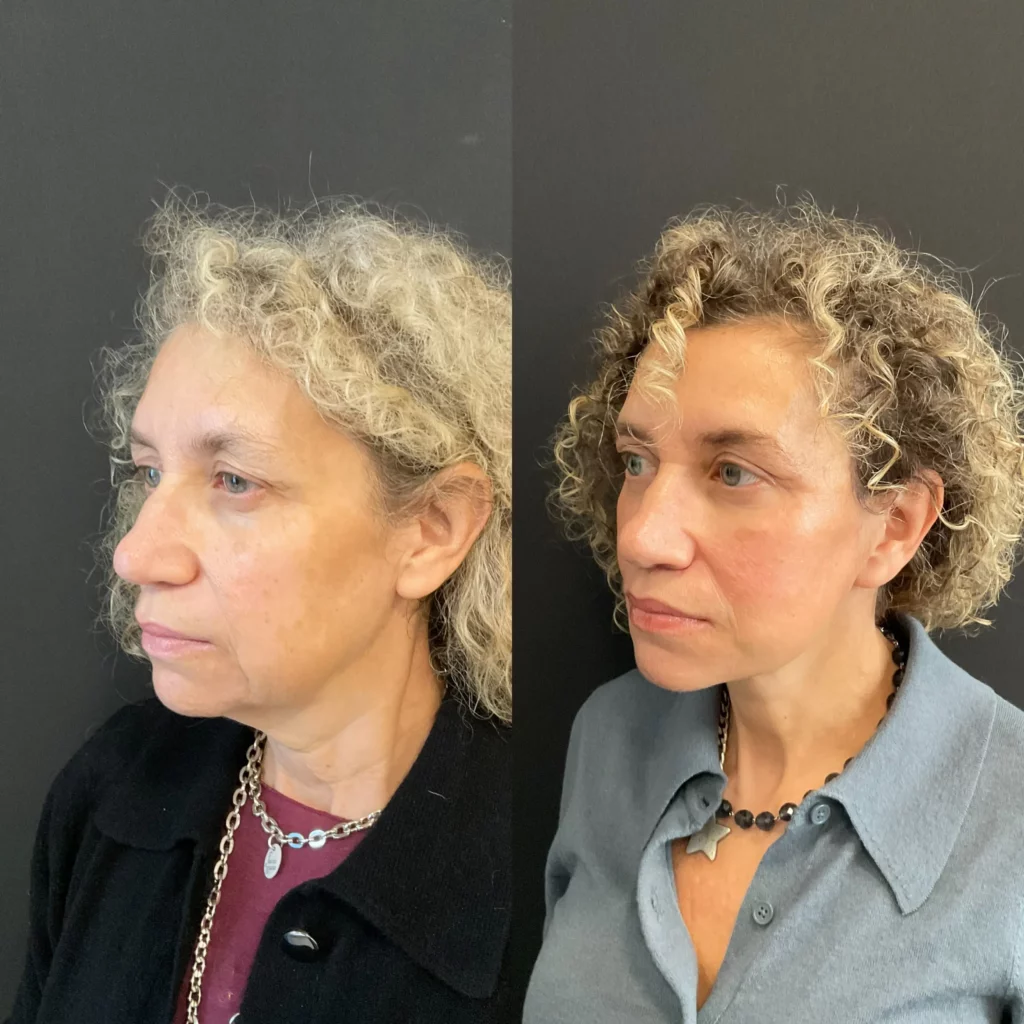
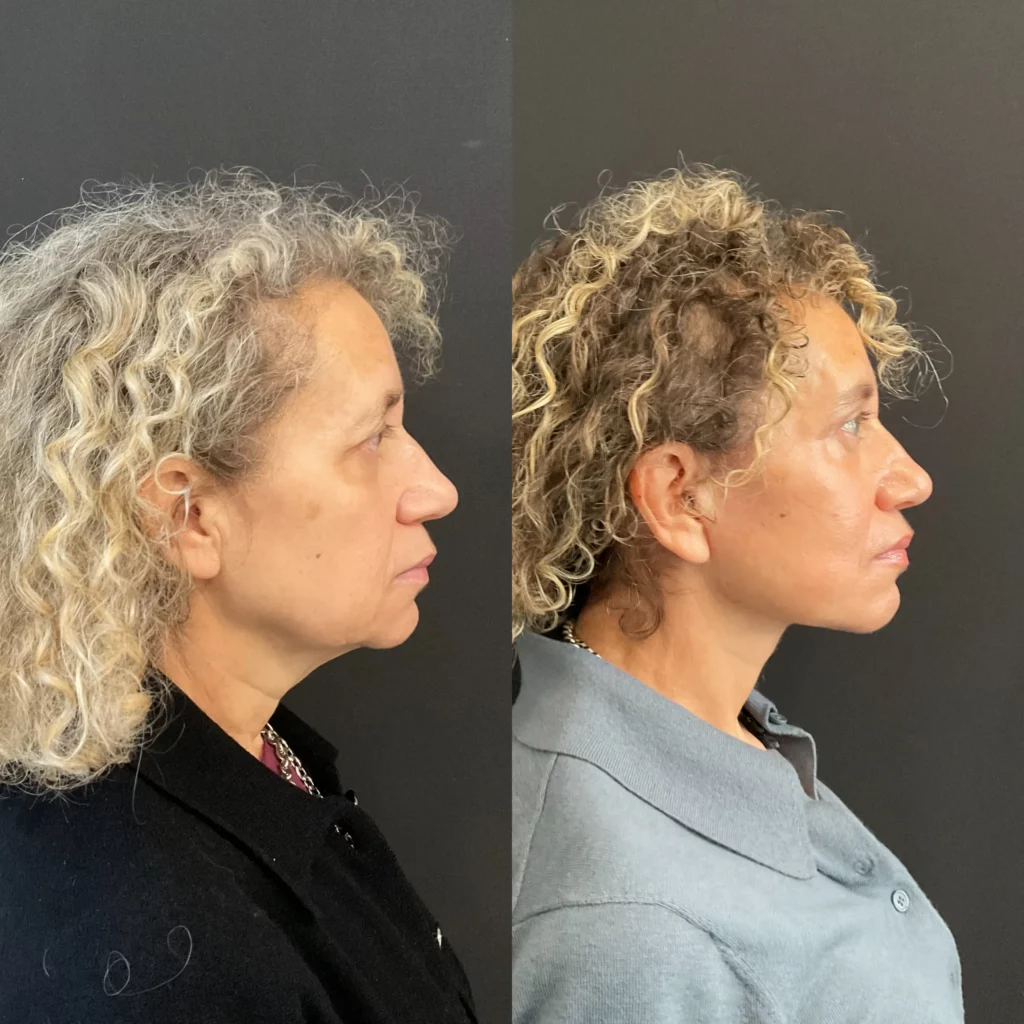
Releasing the deeper layer here and repositioning it softens the marionette lines, lifts the jowls and restores definition to the jawline.
The short-scar neck component is a deep neck lift. Working through a small, discreet incision, it can include a platysmaplasty (tightening the neck muscle band), reduction of the submandibular glands where needed, and contouring of the neck, giving a powerful, sculpted improvement to the neck and jaw.
The result is a strong, natural rejuvenation for patients who do not require lifting of the midface.
Because it focuses on the lower face and neck, it does not lift the midface or the area above the corners of the mouth (the lateral commissures), and it does not require a brow lift. The result is therefore more subtle than a full facelift a softer, targeted intervention with real impact exactly where it is needed.
A softer, early-impact option — and who it suits
This procedure is particularly suited to people with early or modest signs of facial laxity who want to address the neck and lower face before a full facelift is warranted.
For those seeking meaningful improvement at an earlier stage, without surgery to the midface or brow, a deep plane lower facelift and neck lift is often the ideal choice.
Mr Yapa will advise during your consultation whether this approach, or a full deep plane facelift, is better suited to your anatomy and aesthetic goals.
Lower Face Lift London
The Procedure: At a Glance
Procedure length
Typically 3 hours.
Hospital Stay:
Typically an outpatient procedure.
Anaesthesia
General anaesthesia, “twilight” anaesthesia possible.
Downtime
Usually around 2-3 weeks.
Showering
From day 1 – can get hair wet day 2.
Sleeping
Sleep upright (3 pillows) night 1 then can sleep flat/as nornal.
Exercise
Gentle walking can be resumed after a few days. Rigorous activities should be avoided for 6 weeks.
Driving
Avoid for at least 1 week post-surgery.
Smoking
Should be avoided at least 4 weeks before and 4 weeks after surgery.
Sun
Avoid on surgical areas for at least 6 weeks. Always use a high SPF outdoors.
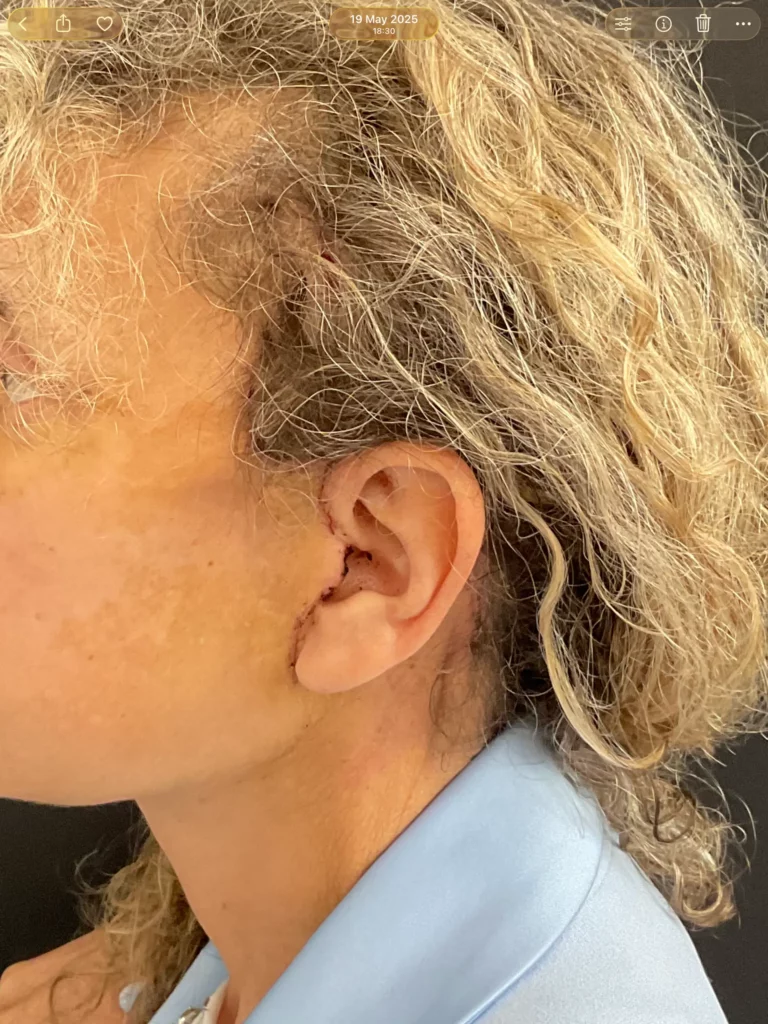
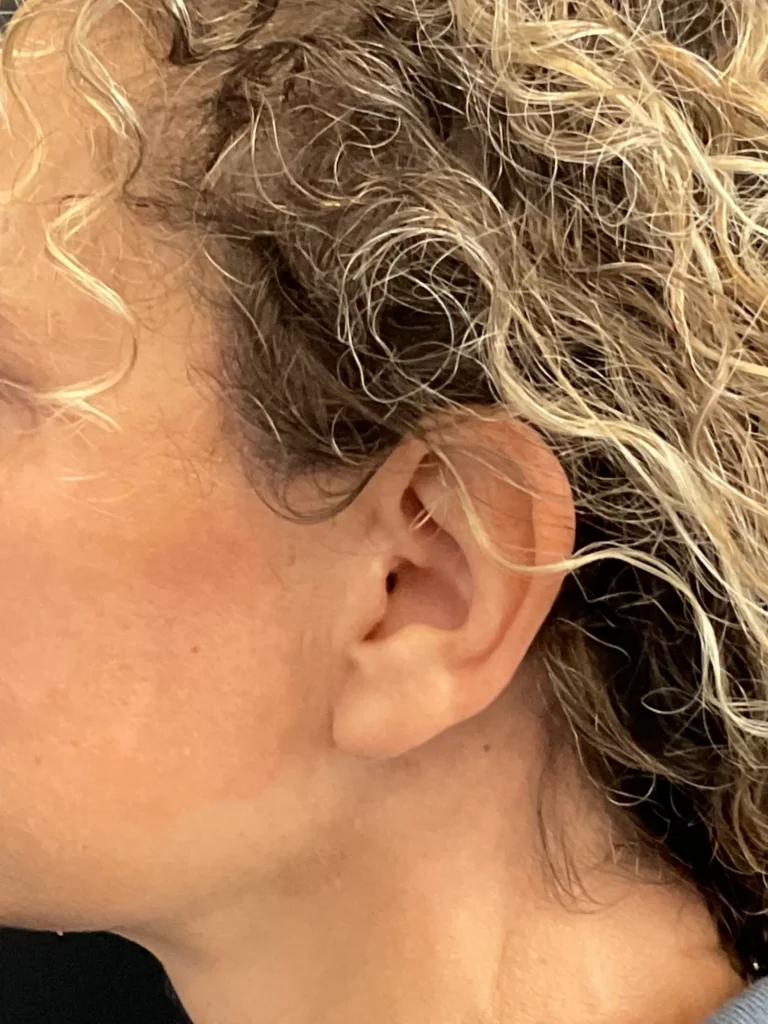
Before and After Facelift




Why you should choose Mr Kshem Yapa for your lower face and neck lift
Mr Kshem Yapa is a board-certified plastic surgeon based in London, providing natural yet meaningful facial surgery for patients worldwide. He specialises in deep plane techniques across the full range of facelift surgery, from the deep plane lower facelift and neck lift through to the full deep plane facelift.
Learn more about our Deep Plane Facelift in London
He carries out the majority of his surgery at the Hospital of St John & St Elizabeth in St John’s Wood (more on this below). A recognised member of BAAPS, Mr Yapa is sub-specialised in advanced facial plastic surgery. He prides himself on patient satisfaction and an honest, open approach, guiding patients through the whole journey from the initial consultation to the end of recovery. You can view examples of his results on his Instagram page.
Benefits of a Lower Face and Neck Lift
Understanding the benefits can help you make an informed decision. They include:
A powerful lower-face and neck result
Releasing and repositioning the deeper layer lifts the jowls, restores the jawline and softens marionette lines, while the deep neck lift sculpts and tightens the neck — a strong result without operating on the midface.
Finer scars
Because the skin and SMAS stay attached and only minimal undermining is needed, the incisions sit under little tension, which helps scars heal discreetly within the natural contours of the ear and hairline.
Natural results
The lift comes from the repositioned deeper layer rather than from pulling the skin, so the result reads as a rested, more youthful version of yourself.
Long lasting results
As a true deep plane procedure, it is generally far more durable than a mini or SMAS-type lift, because the structural layer responsible for facial descent is the one being moved.
A targeted, less extensive procedure
For the right patient, it delivers meaningful impact earlier and with a more focused operation than a full facelift, with no need for midface or brow surgery.
Whats the difference between a Lower Facelift vs a Mini Facelift?
A “mini facelift” sounds like the obvious choice for someone with early changes — but it is worth understanding why Mr Yapa does not usually recommend or perform one.
A mini (SMAS) facelift. A conventional mini facelift is a SMAS-type procedure the SMAS is folded and stitched through a limited dissection. Importantly, the scars are usually much the same as a fuller lift; what is “mini” is the dissection, not the incisions. Because the deeper structures are only partially addressed, the lift has limited power and limited longevity. Its lack of power also creates a hidden problem: to make up for it, the skin can end up being over-tightened to hold the result. Over-tightened skin produces an unnatural, pulled appearance and is the classic cause of stigmata such as “pixie ear”, where the earlobe is dragged downward and distorted. For these reasons it is a procedure Mr Yapa tends to avoid.
A deep plane lower facelift and neck lift. By contrast, this lifts from the deeper layer and ligaments, so the skin is never placed under tension to carry the result. This gives a stronger, more natural and more durable improvement, and avoids the over-tightening that leads to a windswept look or a pixie-ear deformity. In short, even for early or modest laxity, a deep plane approach is the better way to achieve a powerful, lasting and natural result.
How a Lower Facelift and Neck Lift procedure is carried out
The procedure is performed under general anaesthesia, administered by a fully qualified consultant anaesthetist, or under sedation by patient and surgeon preference, with Mr Yapa supported by a full surgical team. It can sometimes be a day case but may involve an overnight stay.
Incisions
Precise incisions are made within the sideburn, around and behind the ear, where they sit in the natural contours and heal discreetly. A small incision beneath the chin gives access for the deep neck lift. The key to fine scars is keeping the skin free of tension.
Releasing and repositioning
Through these incisions, the sub-SMAS plane is opened over the lower face and jawline, the retaining ligaments are released, and the skin and SMAS are repositioned together, softening marionette lines, lifting the jowls and refining the jaw, all without tension.
A deep neck lift
Beneath the chin, the platysma muscle is tightened (platysmaplasty), the submandibular glands are reduced where needed, and the neck is contoured to create a clean, sculpted neckline.
Refining and closure
Any genuinely redundant skin or fat is carefully removed without over-tightening, the incisions are sutured closed, and a small drain is occasionally placed to prevent fluid collecting.
Recovery and personalised recovery support
As with all surgery, this procedure carries risks. Mr Yapa takes every step to minimise them, but they cannot be reduced to zero. They include swelling and bruising (usually settling over 2–3 weeks), temporary numbness, temporary weakness of facial or neck movement (which nearly always resolves fully), scarring, bleeding or a collection of blood beneath the skin (haematoma), infection, minor contour irregularity of the face or neck, and the risks of anaesthesia. Following pre- and post-operative guidance, particularly not smoking helps reduce these risks.
Every surgical patient receives a direct phone line to our specialist surgical nurse, available 24 hours a day for any concerns, side effects or questions. Our priority is a safe, well-supported recovery, with clear communication at every stage.

Book your consultation
If you would like to discuss this procedure in detail and understand if it’s the right procedure for your goals, book a consultation with Mr Kshem Yapa.
“I feel fantastic, look fantastic and natural. I can’t praise Mr Yapa enough. From the moment I met him I felt I am in good hands. I had many questions and he was always happy to provide answers and advice. He is very knowledgeable, professional and caring for his patients.”
DEEP PLANE Facelift patient
“Fantastic experience that I couldn’t fault what so ever! From the consultation to the operation to the anaesthetist and to the after-care has been nothing but exceptional, Dr Yapa an amazing Surgeon who achieves exactly what you ask for. I would have no hesitation what so ever recommending him to anyone.”
Browlift and upper blepharoplasty patient
“Mr Yapa understood what I wanted and went above and beyond to make it happen. During our consultation, I wanted a slight change in my nose, not to be a swoop just straight and he did just that. He understood what I wanted and just went above and beyond for it. This beyond what I expected. He is an amazing, empathetic surgeon.”
Rhinoplasty patient
“Kshem Yapa is a brilliant surgeon and has built a diligent and thoroughly professional team around him. Deep plane facelift surgery is a daunting experience and he and his colleagues were reassuring, pragmatic and kind throughout the whole process. If you are looking for a specialist facial plastic surgeon I highly recommend him and his team. “
DEEP PLANE FACELIFT patient
As seen on




Lower Facelift and Neck Lift FAQs
The procedure is performed under general anaesthesia, administered by a fully qualified consultant anaesthetist, or under sedation by patient and surgeon preference, with Mr Yapa supported by a full surgical team. It can sometimes be a day case but may involve an overnight stay.
Can I combine this a lower face and neck lift with other procedures?
Yes. It can be combined with eyelid surgery (blepharoplasty) or facial fat grafting to restore lost volume, and with non-surgical treatments such as anti-wrinkle injections or skin-hydration treatments after recovery. If your concerns also involve the midface or brow, however, a full deep plane facelift (with a lateral brow lift where appropriate) is likely to suit you better, this is discussed at consultation.
How do I decide between this and a full deep plane facelift?
It comes down to where your concerns lie. If they are concentrated in the lower face and neck, this procedure is ideal. If the midface, cheeks or brow also need addressing, a full deep plane facelift is the better choice. Mr Yapa will assess your anatomy and goals and advise honestly.
How do I prepare for a lower face and neck lift procedure?
You will be given tailored pre-operative guidance, which generally includes stopping smoking well before and after surgery and following advice on medicines and supplements. Your specific instructions will be provided ahead of your procedure.
When will swelling settle?
Most of the early swelling settles over the first three to four weeks, with the most refined result emerging at around three months.
Lower Facelift and Neck Lift CONSULTATION LONDON
Book Your Appointment
Mr Yapa approaches every consultation with the time and honesty that this decision deserves. He will assess your concerns, walk you through the options available, and give you a clear, realistic picture of what lower facelift and neck lift surgery could achieve for you. If a different approach would serve you better, he will say so.
2026 consultation dates are now available to book online, costing £250 (redeemable against your surgery should you wish to go ahead). You can join our waiting list to be notified when new dates become available. For general enquiries or to learn more about our procedures and services, please use the form below to request a callback.
