
Facelift London
Facelift (Rhytidectomy)
A facelift is a surgical procedure designed to address the more advanced signs of ageing across the face and neck. Over time, the skin loses elasticity, so the underlying facial structures shift, and definition along the jaw and neck begins to diminish. A facelift addresses these changes, restoring a more youthful appearance with results that are natural, long-lasting, and entirely your own.
Also known as a rhytidectomy, a traditional facelift targets the mid and lower face as well as the neck, repositioning the deeper layers of facial tissue to restore harmony and balance. If you are considering a facelift, it is important to understand the different facelift procedures available and which will best deliver the results you are looking for. A consultation is always the best way to gain the best personalised information and receive a professional opinion, whilst also benefiting from 3D reconstruction imagery. This is a feature we offer at Yapa Plastic Surgery, which allows patients to see surgical facelift plans for themselves and make an informed decision.
Mr Kshem Yapa is an award-winning Consultant Plastic Surgeon certified by the General Medical Council, with extensive experience in facelift surgery (particularly deep plane facelifts), practising on Harley Street. He is a member of BAAPS and BAPRAS and has trained under some of the world’s foremost facial plastic surgeons.
Face Lift London
The Procedure: At a Glance
Procedure length
Typically 2-5 hours
Cost
Starting at £18,500
Anaesthesia
Typically performed under general anaesthesia, though local with sedation may also be used
Downtime
Usually 10-14 days, with full activity resumption in 4-6 weeks
Hospital stay
Typically an outpatient procedure, but some patients may require an overnight stay for observation
Sleeping
Sleep elevated and avoid sleeping on your side for the first few nights
Showering
Wait 48 hours post-surgery before showering to protect incisions
Smoking
Refrain from smoking at least 4 weeks before and 4 weeks after surgery
Makeup:
Refrain from applying makeup for at least 7-10 days
Sun
Avoid direct sun exposure for at least 6 weeks and always wear a high SPF outside
Driving
Avoid for at least 7-10 days post-surgery
Before and After Facelift Surgery
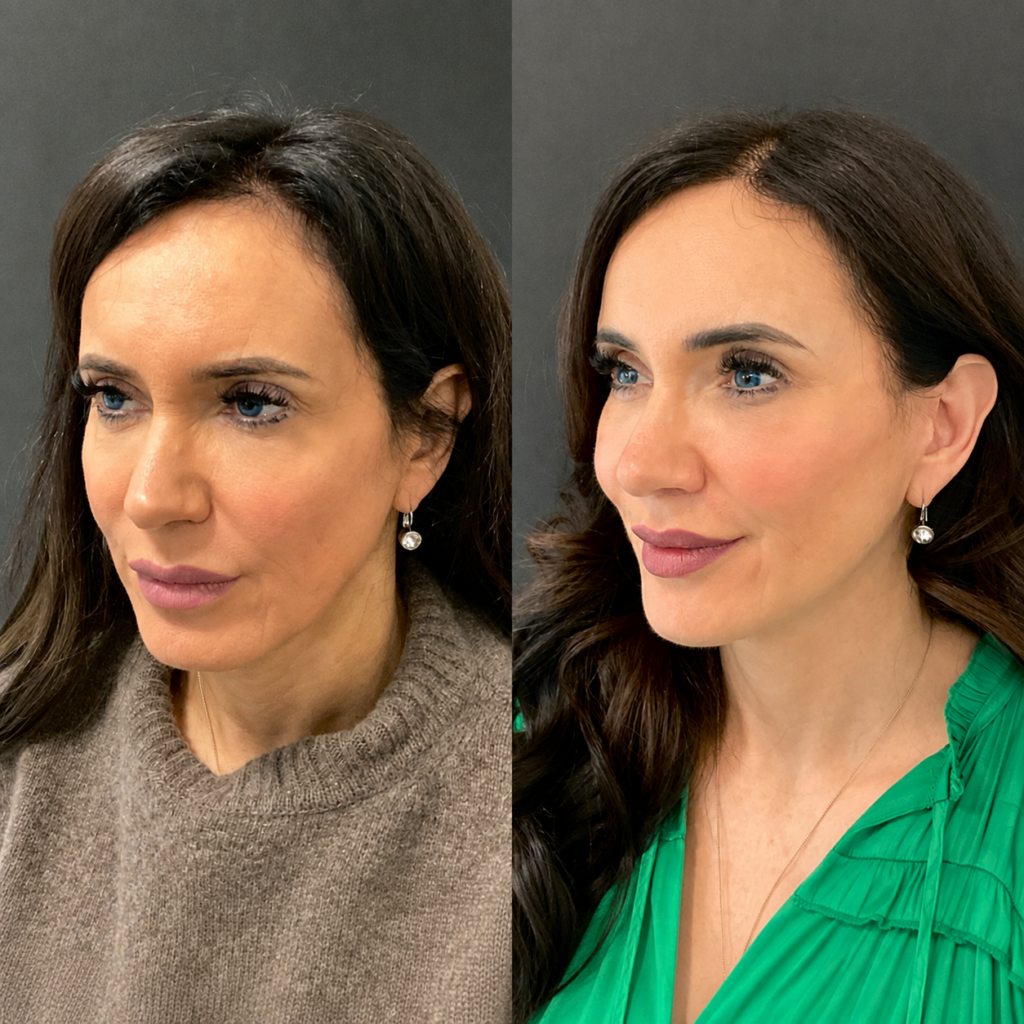

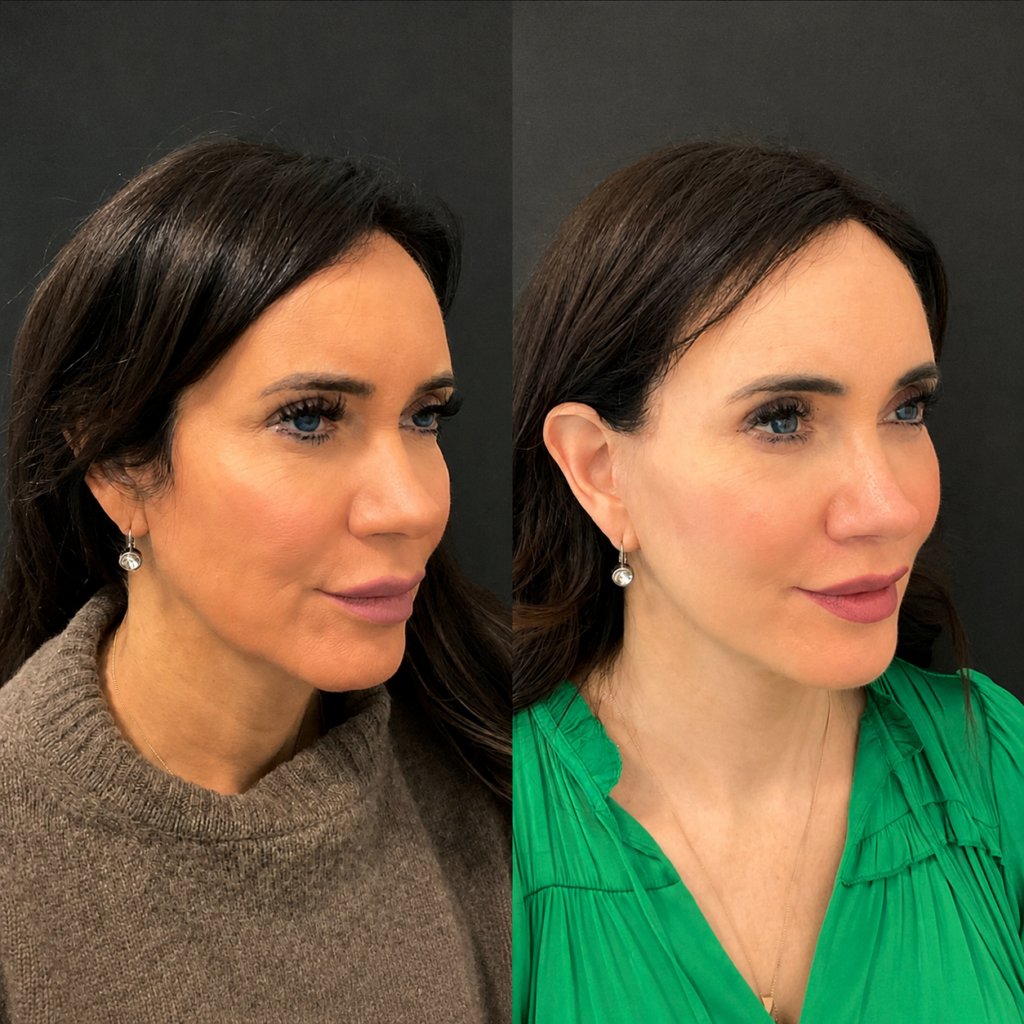
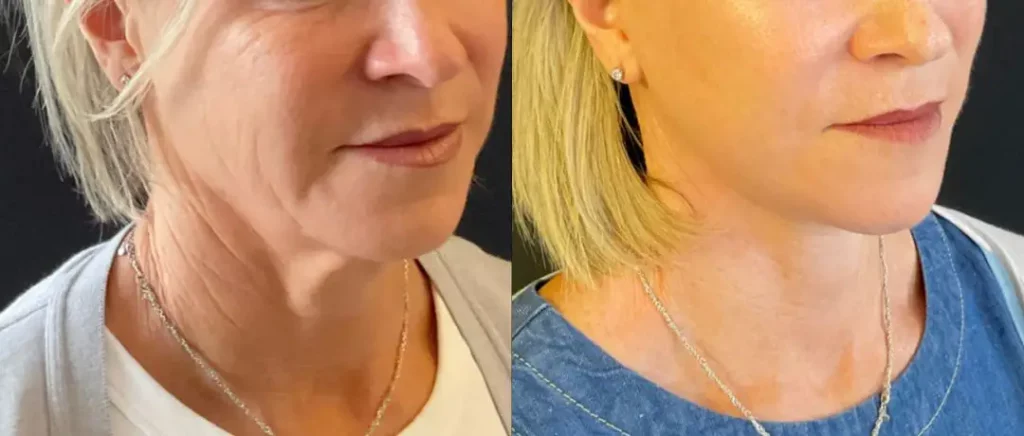

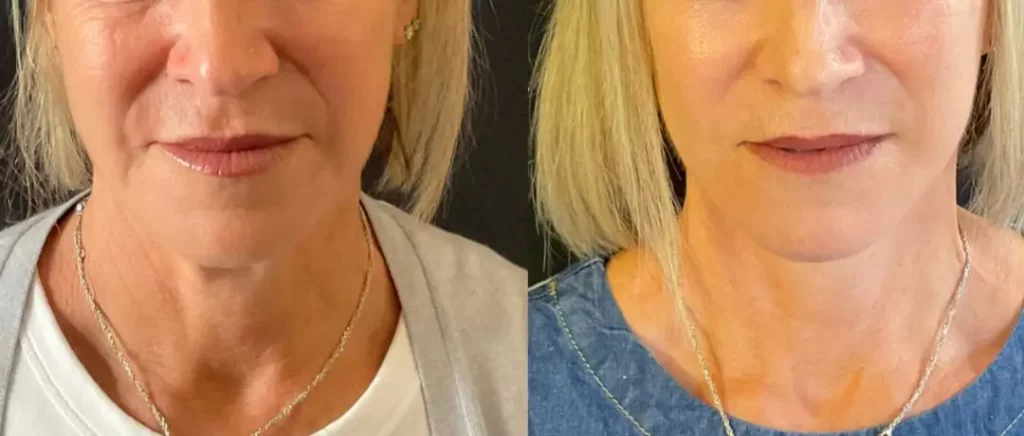
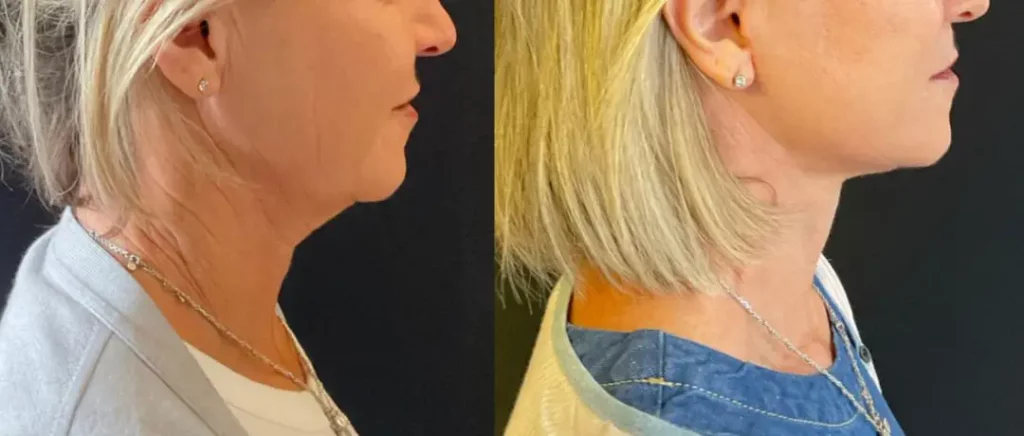
Benefits of a Facelift
Ageing is individual and is shaped by genetics, environment and the choices we make. Significant weightloss, smoking or years of sun exposure can all accelerate the visible changes. A facelift addresses those changes at their source: the structural layers of the face that have descended over time,rather than the surface alone. The main benefits include:
Addressing Multiple Concerns at Once
A facelift tackles several signs of ageing simultaneously, including sagging skin, loss of definition along the jaw, deepening creases, and changes to the neck, making it one of the most wide-ranging surgical options available for facial rejuvenation.
Restoring Jaw & Neck Definition
By repositioning the deeper tissues and removing only the redundant skin, a facelift re-establishes a clean jawline and a defined neck which are among the first features to soften with age.
Addressing Loose & Sagging Skin
As collagen production slows when you age, the skin loses the structure that keeps it firm. A facelift removes excess skin and repositions the underlying tissues, producing a smoother, more supported result that holds over time.
Reduce Deep Wrinkles & Creases
Surface-level treatments can soften fine lines, but deeper wrinkles, particularly around the mouth and nose, can benefit from the structural correction of a facelift. The procedure can be combined with complementary treatments where appropriate for a more complete result.
Natural, Long-Lasting Results
Mr Yapa’s approach is focused on refinement, not reinvention. His technique restores tightness and contour in a way that looks natural, with results that reflect the best version of you rather than an obvious surgical outcome.
The Principle Behind a Modern Facelift
It is worth understanding one principle before weighing up the options. No modern facelift is simply a skin-tightening operation. Beneath the skin and its layer of fat sits the SMAS (the superficial musculoaponeurotic system) which is a continuous, elastic sheet of tissue that gives the face much of its structure. As we age, it is this layer, as much as the skin itself, that descends and loses its support producing jowls, a softened jawline and deepening folds.
The purpose of a well-designed facelift is therefore to reposition the SMAS, restoring support where it has been lost and not merely to pull the skin tighter. Tightening skin alone produces a drawn,operated appearance and a result that does not last, because the skin is asked to hold a load it was never built to carry. How a surgeon chooses to address the SMAS is precisely what separates one technique from another.
Different Types of Facelift Surgery
Each facelift technique addresses specific concerns, and the right approach depends entirely on your goals and facial anatomy. Just because one type of facelift suited one person does not mean it is the best choice for you. The techniques offered at Yapa Plastic Surgery include:
Mini Facelift & Lower Face And Neck Lift
Neck LiftMr Yapa’s equivalent of a “mini” procedure is itself a deep plane operation: a deep plane lower facelift and neck lift. This restores the jowls, jaw definition and neck without the need for midface elevation, giving a natural and durable result matched to a less advanced degree of ageing – rather than the limited result of a conventional mini lift.
Smas Plication
The SMAS is folded on itself and sutured to create lift and tension in the lower face and neck. It is a safe and effective technique in well-selected patients, though it does not reach and reposition the mid-cheek as powerfully as a deep plane approach, which works in the plane beneath the SMAS.
Smasectomy
A redundant strip of the SMAS is excised as the layer is lifted, and the edges are brought together to tighten and realign it; occasionally the excised tissue is transposed to add support elsewhere. As with plication, the skin must first be undermined – frequently over a wide area – to expose the SMAS.
Deep Plane And Preservation Deep Plane Facelift
The deep plane facelift works in the plane beneath the SMAS. Rather than separating skin from SMAS, the two are released and moved together as a single, composite layer. The retaining ligaments that tether the ageing face are released, allowing the cheek and midface to be repositioned vertically in the direction in which they originally descended.
Because the skin and SMAS travel together, far less skin undermining is required than in the techniques above. The skin is never placed under tension to hold the result; the lift is carried entirely by the deeper structural layer. This is what produces a natural, unoperated appearance and a lasting result.
The preservation deep plane technique refines this further, preserving more of the face’s own structural support and minimising skin undermining to an even greater extent. The deep plane and preservation deep plane facelift are Mr Kshem Yapa’s specialist focus and the techniques he performs for the majority of patients seeking a comprehensive, natural and lasting result.
Mr Yapa will advise on the most appropriate technique for your individual goals and anatomy during your consultation.
SMAS Facelift Procedure
Facelift surgery is a safe procedure when performed by an experienced facial surgery specialist in an accredited setting. As with any surgical procedure, it is not entirely without risk, and the exact steps will vary depending on the type of facelift and the individual patient’s needs.
Anaesthesia
Before surgery begins, an anaesthetist will administer the appropriate combination of medications to ensure your comfort throughout the procedure. Facelift surgery is most commonly performed under general anaesthesia, though in some cases it may be carried out under sedation with appropriate pain relief.
Making the Incisions
With the anaesthesia in place, Mr Yapa makes a series of carefully planned incisions, typically positioned along the hairline, around the ear, and occasionally beneath the chin (where the neck also requires attention). Each incision is placed within the face’s natural contours to keep scarring as discreet as possible.
The Lift
Mr Yapa identifies and applies the most appropriate technique based on the facelift variant chosen and the results you are looking to achieve. This is where the underlying SMAS layer is addressed, repositioning the deeper facial structures rather than simply tightening the skin.
Suturing & Closure
Once the SMAS layer has been lifted and secured, any excess skin is removed and the incisions are carefully closed with sutures. In some cases, a small drain may be placed temporarily to prevent fluid build-up and support healing. Closure is carried out with care to make sure scars settle as inconspicuously as possible.
Risks & Complications of Facelift Surgery
As with all plastic and cosmetic surgeries, there are potential risks and complications associated with facelift surgery. Mr Yapa takes every precaution to minimise these and ensures patients are fully informed before proceeding.
Scarring
Despite the care taken to place incisions discreetly within the natural contours of the face and hairline, there is always some risk of scarring. How visibly scars settle will depend on individual skin condition and how you adhere to post-operative care guidance.
Haematoma
A haematoma is a collection of blood beneath the skin that can develop following surgery. Most facelifts resolve without intervention, though some may require attention from Mr Yapa or his team, as they can affect recovery time if left unaddressed.
Nerve Injury
Injury to the facial nerve is rare, but patients should be aware of this risk. Any changes to sensation or facial movement are most commonly temporary, resolving as the tissues heal.
Infection
Like any surgical procedure, there is a risk of infection at the wound site. Following pre- and post-operative guidance carefully, including refraining from smoking, will reduce this likelihood.
Negative Anaesthesia Response
A small number of patients may experience an adverse reaction to anaesthesia. A thorough pre-operative assessment is carried out for all patients to identify and mitigate any such risks in advance.
Recovery from a Facelift
How you recover from facelift surgery varies from patient to patient, depending on overall health, the technique used, and how the body responds.
0 – 48 Hours
You will wake from surgery with a bandage around your head to protect the incision sites. An overnight stay may be recommended for observation. Swelling and bruising are normal, and sleeping with your head elevated will help them to settle more quickly.
1 – 2 Weeks
A compression garment may be worn around the face for the first two weeks to manage swelling and support healing. Avoid lifting anything heavy and always rest where possible. Most patients feel comfortable returning to light activity by the end of week two.
3 – 4 Weeks
Swelling will have reduced considerably by this stage. Some patients experience mild intermittent numbness, which is a normal part of healing and typically resolves on its own.
6 – 12 Weeks
Most patients reach the end of their recovery period between weeks six and twelve. Mr Yapa will assess your progress and clear you to resume normal activity when appropriate. Final results will continue to refine over the months that follow.

Book your consultation
If you would like to discuss this procedure in detail and understand if it’s the right procedure for your goals, book a consultation with Mr Kshem Yapa.
“I feel fantastic, look fantastic and natural. I can’t praise Mr Yapa enough. From the moment I met him I felt I am in good hands. I had many questions and he was always happy to provide answers and advice. He is very knowledgeable, professional and caring for his patients.”
DEEP PLANE Facelift patient
“Fantastic experience that I couldn’t fault what so ever! From the consultation to the operation to the anaesthetist and to the after-care has been nothing but exceptional, Dr Yapa an amazing Surgeon who achieves exactly what you ask for. I would have no hesitation what so ever recommending him to anyone.”
Browlift and upper blepharoplasty patient
“Mr Yapa understood what I wanted and went above and beyond to make it happen. During our consultation, I wanted a slight change in my nose, not to be a swoop just straight and he did just that. He understood what I wanted and just went above and beyond for it. This beyond what I expected. He is an amazing, empathetic surgeon.”
Rhinoplasty patient
“Kshem Yapa is a brilliant surgeon and has built a diligent and thoroughly professional team around him. Deep plane facelift surgery is a daunting experience and he and his colleagues were reassuring, pragmatic and kind throughout the whole process. If you are looking for a specialist facial plastic surgeon I highly recommend him and his team. “
DEEP PLANE FACELIFT patient
As seen on




Facelift Surgery London FAQs
How much does a facelift in London cost?
The cost of facelift surgery will vary depending on a number of factors, including the technique used and whether any combination procedures are included. Facelift surgery at Yapa Plastic Surgery starts at £18,500. This cost includes anaesthesia, surgical expenses, and post-operative care, all of which will be outlined in full during your consultation.
How do I know if a facelift is right for me?
Good candidates typically have visible signs of ageing, including sagging skin, jowls, volume loss, and deep wrinkles, though significant weight loss can also prompt patients to consider a facelift. Realistic expectations are important, as additional treatments may be needed alongside surgery for the best outcome. A consultation with Mr Yapa will give you a clear and honest assessment of what is right for you.
How long do facelift results last?
Facelift results can typically last ten years or more, though this is dependent on individual genetics, lifestyle, and sun exposure. The procedure does not stop the natural ageing process, but it resets the clock considerably. Following a good skincare routine and protecting the skin from UV damage will help to preserve results over time.
Can a facelift be combined with other procedures?
Yes. Many patients choose to combine facelift surgery with complementary procedures such as a neck lift, lip lift, brow lift, or upper eyelid surgery, to address more areas in a single procedure. Combining treatments allows for a single recovery period and a more cohesive outcome. Mr Yapa will advise on whether combination surgery is appropriate for your goals during your consultation.
What is the best age to have a facelift?
There is no single optimal age for facelift surgery. The procedure tends to be most effective when there are visible signs of ageing present, and for most patients this falls somewhere from their forties onwards, though this varies considerably depending on genetics, lifestyle, and skin condition. Those with less advanced concerns may be better suited to a Mini Facelift, while patients with more significant changes across the face may benefit from a Deep Plane Facelift. Mr Yapa will advise on the most appropriate approach for your age and anatomy during consultation.
How do I prepare for a facelift?
Mr Yapa will provide a bespoke preparation plan following your consultation. In addition to any individual guidance, the following applies to all patients:
- Maintain good skin care. Avoid makeup 24 hours before surgery and protect your skin from sun exposure in the lead-up to your procedure.
- Maintain a good diet. A well-balanced diet supports your immune system during surgery and promotes healing during recovery.
- Stop smoking. Smoking should be stopped at least 6 to 8 weeks before surgery, as it increases surgical risk and hinders the healing process.
- Plan ahead. Arrange the recommended time off work and organise support at home for the duration of your recovery, including help with daily tasks you will be unable to carry out.
- Follow your surgeon’s advice. Mr Yapa will provide a complete preparation guide to help you achieve the best results.
How will I sleep following a facelift?
Mr Yapa will provide tailored advice on sleeping comfortably after surgery. In most cases, patients are advised to sleep on their back with their head elevated on two pillows to help reduce swelling. Specialist recovery pillows designed to prevent the head from rolling to one side can also be helpful. Pain relief, whether prescribed or over-the-counter, will be recommended to manage any discomfort during the early days of recovery.
What lifestyle tips can I follow to make my results last longer?
The longevity of facelift results is influenced by how well you look after your skin and general health in the years that follow. Protecting your skin from UV exposure by wearing a high SPF daily is one of the most effective things you can do. Maintaining a stable weight, following a consistent skincare routine, avoiding smoking, and staying well hydrated will all support the lasting quality of your results. Mr Yapa can advise on complementary treatments that may help to maintain your outcome over time.
When can I shower and wash my hair after facelift surgery?
Most patients can shower gently 48 hours after surgery, taking care to avoid direct water pressure on the incision sites. Hair washing should be approached carefully in the first week and carried out with a mild shampoo. Mr Yapa and the team will provide specific guidance on this as part of your post-operative care instructions.
Who are the best facelift surgeons in London?
Mr Kshem Yapa is an award-winning, GMC-certified Consultant Plastic Surgeon specialising in advanced facelift techniques.
FACELIFT CONSULTATION LONDON
Book Your Appointment
Mr Yapa approaches every consultation with the time and honesty that this decision deserves. He will assess your concerns, walk you through the options available, and give you a clear, realistic picture of what facelift surgery could achieve for you. If a different approach would serve you better, he will say so.
2026 consultation dates are now available to book online, costing £250 (redeemable against your surgery should you wish to go ahead). You can join our waiting list to be notified when new dates become available. For general enquiries or to learn more about our procedures and services, please use the form below to request a callback.
