
Rhinoplasty London
Rhinoplasty (Nose Job)
Rhinoplasty, often called a nose job, changes the shape of the nose to improve its appearance, its function, or both. Patients consider nose surgery for a range of reasons, from aesthetic enhancement to improving breathing difficulties caused by structural abnormalities.
As the central feature of the face, the nose has a significant bearing on overall facial harmony. For anyone considering rhinoplasty, Yapa Plastic Surgery focuses on a natural nose look that feels like part of you, supported by 3D imaging ahead of surgery.
Rhinoplasty London
The Procedure: At a Glance
Procedure Length:
Typically 1 to 3 hours
Cost:
Starting at £9,500
Anaesthesia:
General anaesthesia or local anaesthesia with sedation
Downtime:
Around 1 to 2 weeks for major swelling to subside
Hospital Stay:
Usually discharged the same day
Sleeping:
Keep the head elevated for the first week
Showering:
Possible after 48 hours, avoiding the nasal area
Makeup:
Avoid on the nasal area for at least a week
Smoking and Drinking:
Avoid smoking and drinking for at least 2 weeks before surgery and throughout recovery
Sun exposure:
Minimise for 3 months post-procedure and use a high SPF outdoors
Driving:
Avoid for 24 hours post-surgery and until anaesthesia and pain medication have worn off
Before and After Rhinoplasty
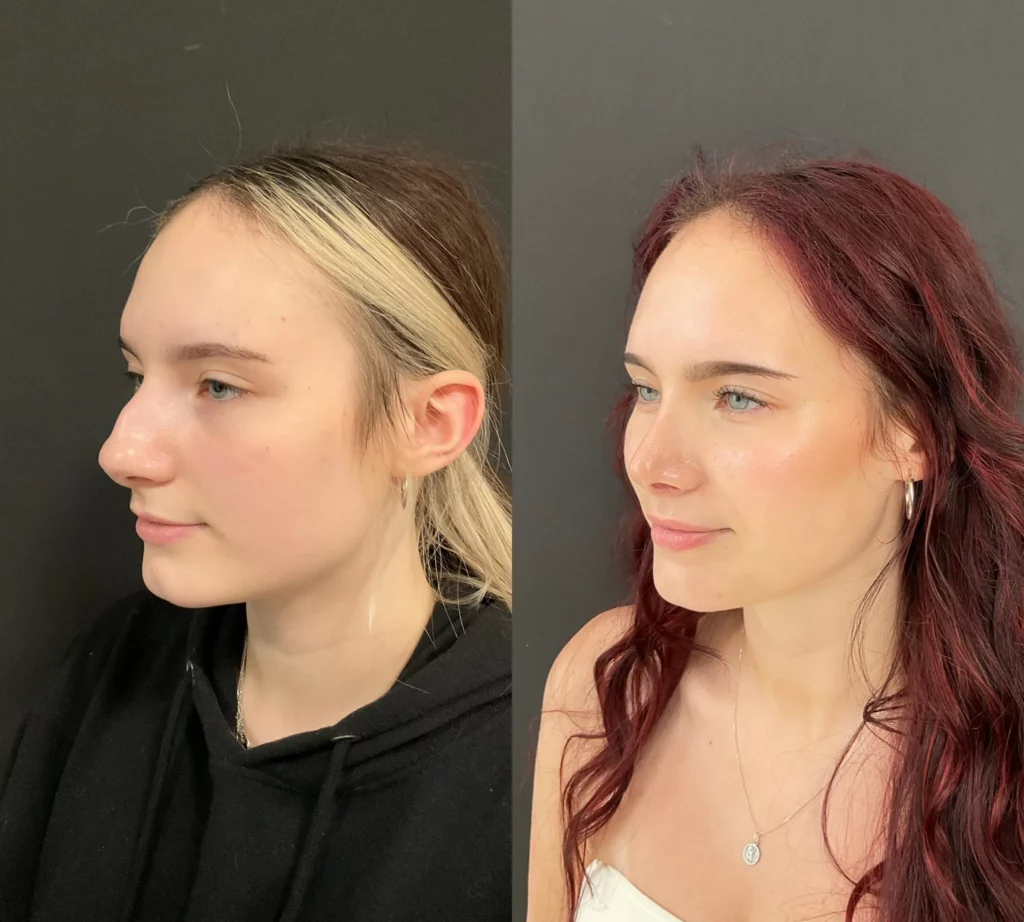


Benefits of Rhinoplasty
For many patients, rhinoplasty and facial harmony go hand in hand. It addresses concerns in the nose that non-surgical treatments and less involved options cannot reach, offering a level of refinement that surface-level solutions cannot replicate: structural asymmetry, an over-projected bridge, the size of the nose relative to other features, or a poorly defined tip.
Mr Yapa specialises in rhinoplasty, offering different types of rhinoplasty, including tip rhinoplasty and revision rhinoplasty tailored to individual anatomy.
Improved Facial Symmetry
Rhinoplasty can correct asymmetry within the nose, bringing it into closer balance with the rest of the face. Even subtle adjustments to the aesthetics of the nose can make a real difference to how balanced the whole face feels.
A Better Proportioned Nasal Bridge
Both the width of the nose and the bridge of the nose affect how it sits within the face as a whole. A well-proportioned bridge supports a more balanced, natural-looking result that complements the surrounding features rather than drawing attention away from them.
Refined Nostril Size and Position
Nostrils that are wide, upturned, or uneven in size can be adjusted through nasal surgery, improving the overall appearance of your nose. In some cases, this adjustment can also support easier, more comfortable breathing.
A More Desirable Nasal Profile
Visible lumps, bumps or dips along the length of the nose can be smoothed to create a straighter, more even profile.
Improved Nasal Tip
An enlarged, bulbous, drooping, or hooked tip of the nose can be refined through rhinoplasty, creating a nose that feels balanced and proportionate to the rest of the face.
Rhinoplasty Procedure
Every nose reshaping surgery is planned around the individual, taking into account nasal structure, medical history, and the desired outcome. The procedure is carried out under anaesthesia administered by a qualified anaesthetist, with surgeon Mr Yapa supported by a full surgical team, and is typically performed as a day case.
Anaesthesia
Surgery is performed under either local anaesthesia with sedation or general anaesthesia. This depends on your health, the complexity of the procedure, and the type of surgery performed, alongside Mr Yapa’s clinical judgement.
Making the Incision
Rhinoplasty uses a closed or an open technique, decided at consultation.
Closed approach: incisions are made within the nose, so there is no visible scarring.
Open approach: a small incision is made on the underside of the nose, to the tissue that separates the nostrils (columella). It may result in a small scar where the incision was made, though scarring is usually minimal and fades with time.
Reshaping the Nasal Tip
Where the tip is enlarged, drooping, or poorly defined, the surgeon may suture, reduce, or reinforce the underlying cartilage to create a more balanced, proportionate shape. Patients whose concerns are limited to this area alone may instead be better suited to a Tip Rhinoplasty.
Reshaping the Nasal Bridge
Lumps, bumps, or excess width along the bridge are addressed by carefully filing or reshaping the bone and cartilage, smoothing the profile from base to tip. For some patients, this can be carried out using Ultrasonic Rhinoplasty, which allows more precise bone reshaping.
Straightening the Nose
Where asymmetry stems from a deviated septum, the septum is repositioned and any blockages addressed, allowing the nose to sit straighter within the face.
Adjusting the Nostrils
If required, a small incision is made at each nostril to remove excess tissue, refining their size, shape, and proportion relative to the rest of the nose.
Closing
Once reshaping is complete, incisions are sutured to support healing and keep visible scarring to a minimum, while securing the internal structures that maintain the nose’s long-term shape.
Risks and Complications of Rhinoplasty
Like any cosmetic surgery procedure, rhinoplasty carries a degree of risk. Mr Yapa discusses these risks honestly and in full during consultation, so patients feel confident before making any decision.
Swelling
A common postoperative symptom of rhinoplasty that typically subsides over time.
Bruising
It is normal to experience some degree of bruising following your nose job. This generally resolves within a few weeks. Cold compresses and rest in the early days can help this process along.
Bleeding
Excessive bleeding during or after surgery is uncommon. Patients are advised to avoid blood-thinning medication in the weeks before their procedure to reduce this risk.
Asymmetry
Variations in healing can occasionally lead to slight asymmetry, even when the surgical plan was carried out precisely as intended.
Scarring
Scarring is usually minimal. Closed rhinoplasty leaves no visible scar, while open rhinoplasty may leave a small mark at the base of the nose that fades with time.
Breathing Difficulties
Temporary breathing difficulties can occur after surgery due to swelling. In rare cases, these persist and may need further treatment.
Negative Anaesthesia Response
A small number of patients may experience an adverse reaction to anaesthesia. A thorough pre-operative assessment helps to identify any relevant factors in advance.
Rhinoplasty Recovery
Recovery from rhinoplasty, like other surgical procedures, occurs gradually as swelling settles and the nose takes on its final shape over several months. Mr Yapa will provide a personalised recovery plan and monitor your progress throughout.
0 – 48 Hours
You may experience some swelling and bruising around your nose and eyes in the first two days, along with mild discomfort managed by prescribed pain relief. Showering should be avoided during this time to protect the nasal area, and driving should be avoided until anaesthesia and pain medication have fully worn off.
1 – 2 Weeks
Sleeping with your head elevated during this period helps swelling settle more quickly. Most bruising, swelling, and bleeding will have reduced considerably by the two-week mark, which is generally the recommended time to take off work. Makeup should still be avoided on the nasal area.
3 Months
By three months, changes in nose shape should be far less noticeable outwardly, and most patients feel fully back to their usual routine. Sun exposure should still be minimised during this period, with a high SPF applied when outdoors.
6 – 12 Months
The shape of your nose typically becomes apparent at around six months, though complete internal healing can take up to a year as the last of the fluid retention resolves.

Book your consultation
If you would like to discuss this procedure in detail and understand if it’s the right procedure for your goals, book a consultation with Mr Kshem Yapa.
“I feel fantastic, look fantastic and natural. I can’t praise Mr Yapa enough. From the moment I met him I felt I am in good hands. I had many questions and he was always happy to provide answers and advice. He is very knowledgeable, professional and caring for his patients.”
DEEP PLANE Facelift patient
“Fantastic experience that I couldn’t fault what so ever! From the consultation to the operation to the anaesthetist and to the after-care has been nothing but exceptional, Dr Yapa an amazing Surgeon who achieves exactly what you ask for. I would have no hesitation what so ever recommending him to anyone.”
Browlift and upper blepharoplasty patient
“Mr Yapa understood what I wanted and went above and beyond to make it happen. During our consultation, I wanted a slight change in my nose, not to be a swoop just straight and he did just that. He understood what I wanted and just went above and beyond for it. This beyond what I expected. He is an amazing, empathetic surgeon.”
Rhinoplasty patient
“Kshem Yapa is a brilliant surgeon and has built a diligent and thoroughly professional team around him. Deep plane facelift surgery is a daunting experience and he and his colleagues were reassuring, pragmatic and kind throughout the whole process. If you are looking for a specialist facial plastic surgeon I highly recommend him and his team. “
DEEP PLANE FACELIFT patient
As seen on




Rhinoplasty London FAQs
How much does rhinoplasty cost in London?
Patients researching nose job London prices will find that rhinoplasty at Yapa Plastic Surgery starts from £9,500 for ultrasonic rhinoplasty, with septorhinoplasty with piezo from £10,500 and revision rhinoplasty from £12,500. Initial consultations cost £250, with second consultations and any follow-up appointments free of charge.
Pricing will depend on the complexity of your procedure and will increase if multiple procedures are carried out during the same surgery. A full breakdown will be provided during your consultation.
Can I combine rhinoplasty with other procedures?
Rhinoplasty is often combined with other facial procedures, such as chin augmentation or a brow lift, to bring better balance to the face in a single operation and recovery. Mr Yapa will assess your suitability for combining procedures during consultation.
What surgical techniques are used in rhinoplasty?
The technique the surgeon employs depends on open and closed rhinoplasty approaches, suited to your anatomy and goals. The key approaches include:
- Incision placement: a closed technique with incisions hidden inside the nose, or an open technique using a small incision on the columella for greater visibility
- Cartilage work: suturing, removing, or adding cartilage to reshape the tip or bridge, sometimes using cartilage taken from the ear, nose, or rib for extra support
- Bone reshaping: filing or carefully breaking down bone to smooth the profile of the bridge
- Septal correction: repositioning the septum to straighten the nose and improve breathing, sometimes extending to septorhinoplasty surgery when the septum needs more extensive correction
- Nostril adjustment: removing excess tissue to refine size and proportion
Your surgeon will discuss which of these techniques applies to your anatomy during consultation.
How do I prepare for rhinoplasty?
Following your consultation, your surgeon will advise on a preparation plan specific to your health and circumstances. The following general guidance applies to all patients:
- Follow Mr Yapa’s guidance; your surgeon will also discuss what to expect during recovery, and a full preparation guide will be provided after your consultation.
- Stop smoking at least 4 weeks before surgery. Smoking is linked to a higher risk of complications and slower healing; Mr Yapa will advise on the exact timeline for your procedure.
- Avoid drinking in the days before and after surgery, as alcohol thins the blood and increases the risk of excessive bleeding.
- Arrange transport home and some support at home afterwards, as swelling can affect your vision in the first few days.
How long will it take to see the results of my rhinoplasty?
The average time it takes to see the final results of rhinoplasty is around 12 to 18 months. Most of the swelling subsides within a matter of weeks, but it is common for some fluid to remain present over the following months. Each person has a variable healing response, so the final shape of the nose emerges gradually over this period.
How long does it take to recover from rhinoplasty?
Following rhinoplasty surgery in London, it is recommended that at least two weeks be taken off work to focus on rest and recovery. This is the average time scale over which swelling is expected to go down, so you may need more time depending on the complexity of your nose surgery. Complete recovery can range anywhere between six weeks and twelve months, as each patient experiences variable time scales for the nose to take its final shape.
Is rhinoplasty painful?
Anaesthesia means you shouldn’t feel pain during surgery itself. Some discomfort afterwards is normal, and Mr Yapa will prescribe pain medication to help manage this during recovery.
Rhinoplasty CONSULTATION LONDON
Book Your Appointment
Every rhinoplasty procedure with Mr Yapa begins with a detailed consultation at our London clinic on Harley Street. If you are looking for rhinoplasty in London, or are considering a rhinoplasty for the first time, meeting the right surgeon in person is the natural place to start. An experienced surgeon will take the time to understand your goals, explain what rhinoplasty involves, and support you every step of the way. If a different approach would suit you better, he will explain that clearly.
2026 consultation dates are now available to book online, costing £250 (redeemable against your surgery should you wish to go ahead). You can join our waiting list to be notified when new dates become available. For general enquiries or to learn more about our procedures and services, please use the form below to request a callback.
