
Deep Plane Facelift London
Deep Plane Facelift
Written and medically reviewed by Mr Kshem Yapa. Last reviewed: 01 October 2026.
The deep plane facelift is an approach to facial surgery that works at a deeper anatomical level than a traditional facelift, repositioning the skin and SMAS together as a single unit rather than tightening the skin alone. The result is facial rejuvenation that is more natural, more effective, and longer-lasting.
The procedure is performed by Mr Kshem Yapa, a GMC-certified Consultant Plastic Surgeon sub-specialising in deep plane facelift surgery, who consults from Harley Street and operates at the Hospital of St John & St Elizabeth in St John’s Wood, London UK.

Deep Plane Facelift London
The Procedure: At a Glance
Deep Plane Facelift Procedure Length:
Typically 4-7 hours
Deep Plane Facelift Cost:
Prices starting from £18,500
Anaesthesia:
Typically general anaesthesia, most often TIVA, delivered by one of the small named team of consultant anaesthetists Mr Yapa works with. Sedation with local anaesthesia can also be considered for selected patients.
Downtime:
10-14 days for visible recovery
Hospital Stay:
Overnight stay is typically recommended
Sleeping:
Sleep with your head elevated on your back; avoid sleeping on your side for the first two weeks
Showering:
Wait 48 hours post-surgery before showering to protect incisions
Smoking:
Refrain from smoking for at least 4 weeks before and 4 weeks after surgery
Makeup:
Refrain from applying make-up for at least 10 days post procedure
Sun Exposure:
Should be avoided for 6 weeks post procedure and a high SPF applied when outdoors
Driving:
Avoid for at least 10-14 days post-surgery
Before & After Deep Plane Facelift Surgery Results
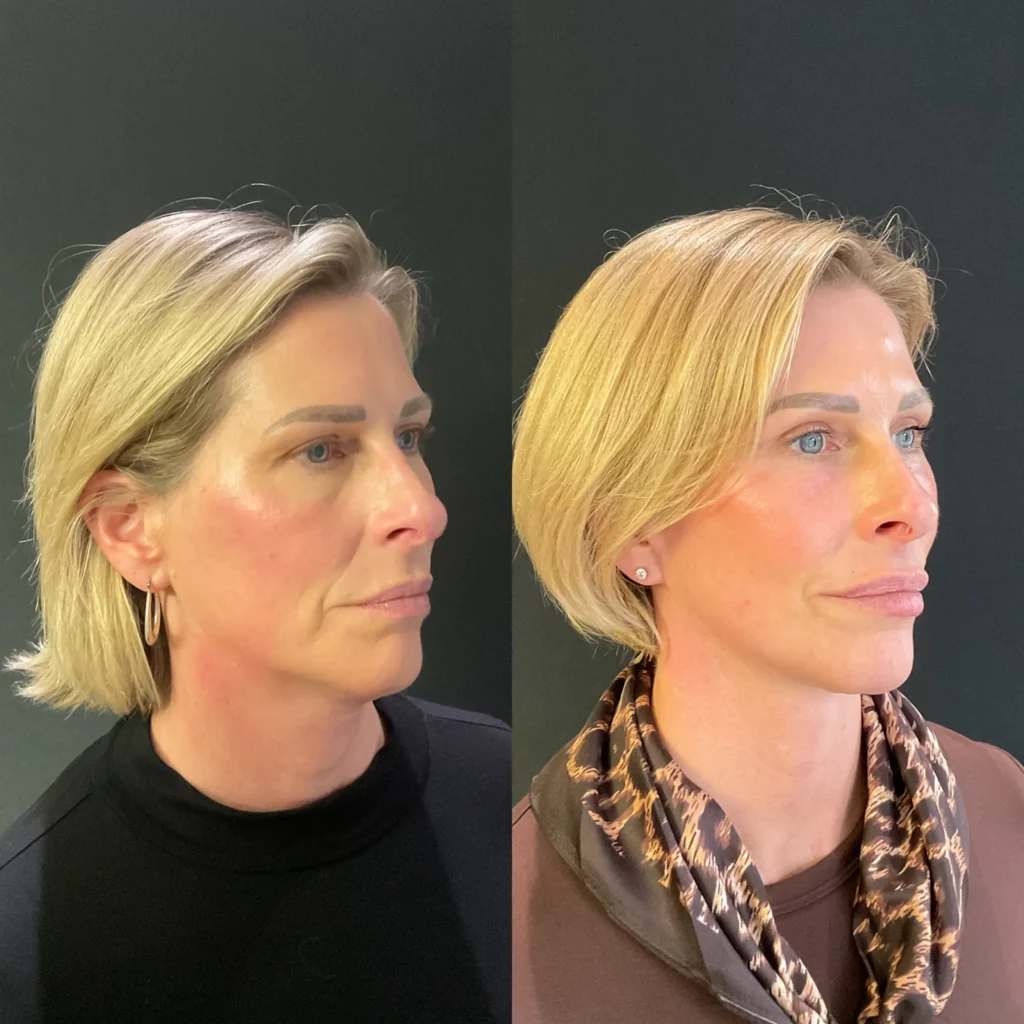

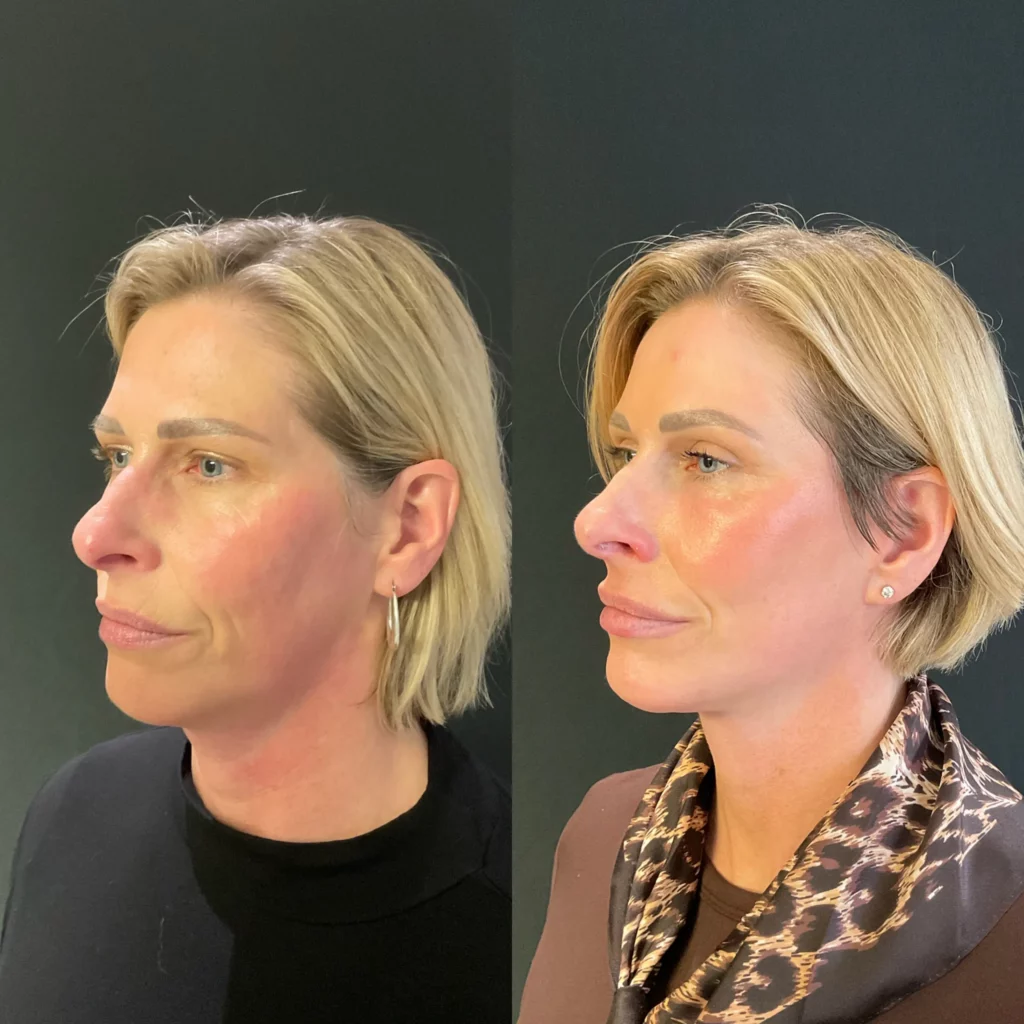


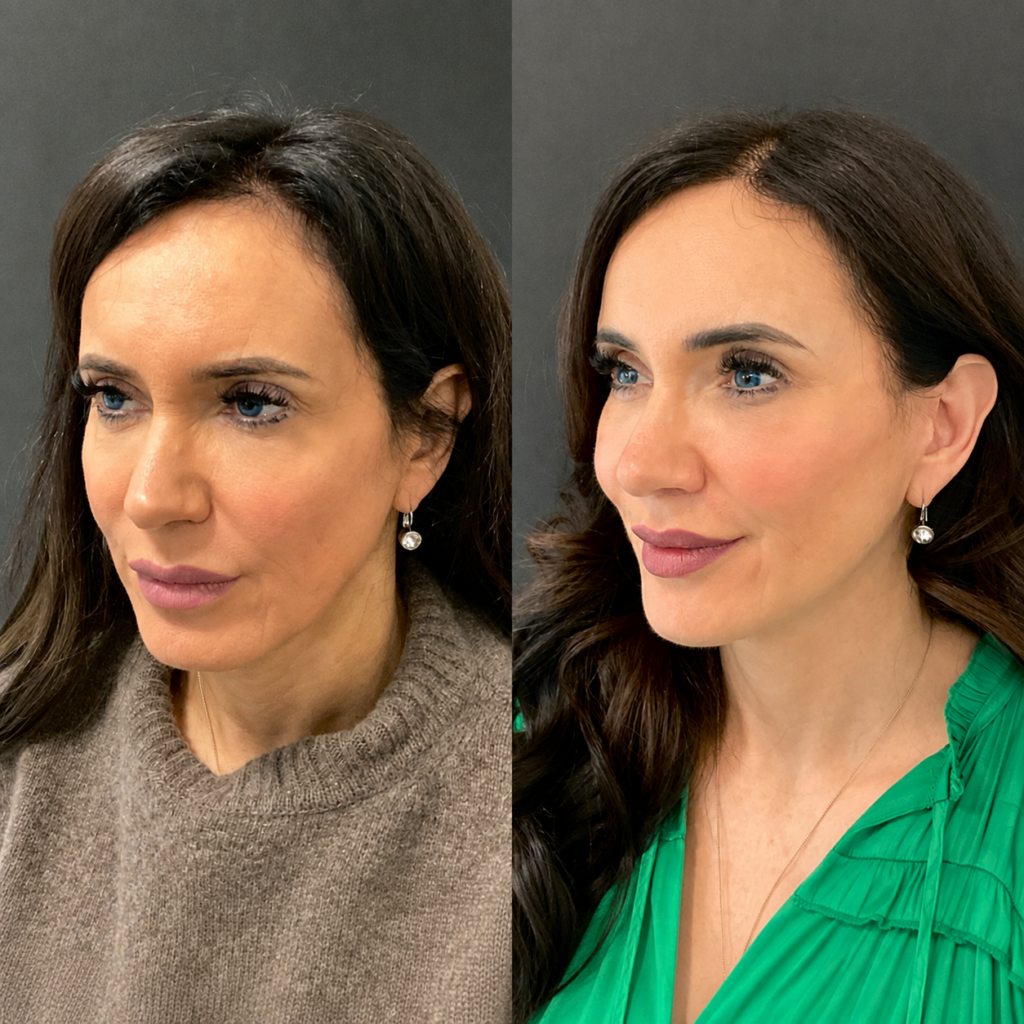

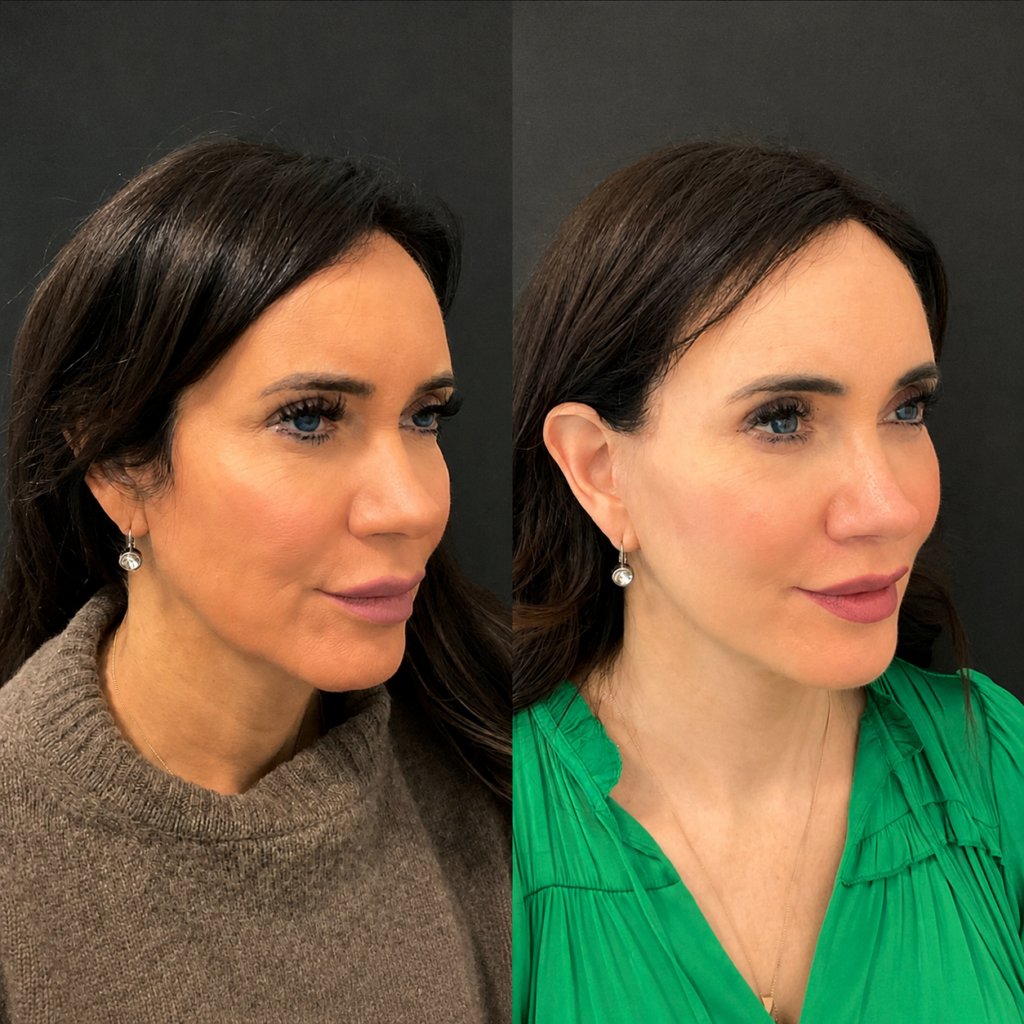
What is the SMAS, and why does a facelift need to address it?
Beneath the skin of the face lies a continuous, elastic sheet of fibrous and muscular tissue known as the SMAS. This is the superficial musculoaponeurotic system. It connects the facial muscles to the overlying skin and holds the soft tissues of the face in position. With age, this layer loses its elasticity and descends, carrying the cheek fat and skin downward. That descent produces jowling along the jawline, loss of cheek definition and deepening folds that run from the nose to the mouth.
The skin follows the SMAS. It is not the cause of the change, which is why tightening the skin alone produces a pulled look that does not last. It is the SMAS that must be released and repositioned, and that is precisely what a deep-plane facelift does.
The deep plane technique divides the retaining ligaments that tether the SMAS to the deeper facial structures. Once those attachments are released, the SMAS, the facial fat and the overlying skin can be lifted and repositioned as a single unit in the direction the face has genuinely descended. Because the layers move together, no layer is stretched against another, and the face is restored to a position it once held rather than pulled into a new one.
The Preservation Deep Plane Approach
Mr Yapa uses a deep-plane preservation approach. In practice, this means the skin is barely separated from the layer beneath it. Almost all of the surgery is carried out in the deep plane, and the skin travels with the underlying tissue rather than being lifted away, stretched and trimmed.
Minimal skin undermining matters for three reasons:
- It preserves the skin’s blood supply. The small vessels that feed the facial skin run in the layer immediately beneath it. Leaving that layer largely intact supports healing, reduces bruising and lowers the risk of wound-healing problems, particularly at the incision edges.
- It allows a tension-free closure. Because the lift is held by the repositioned deep layer, the skin is laid back down rather than pulled. Scars heal under no tension, which is what keeps them fine, and the natural shape of the ear and the hairline is preserved.
- It produces a more powerful and more durable correction. Skin is elastic and relaxes within months, so any lift held by skin tension is, by definition, temporary. A properly released and secured deep plane holds its position.
This principle applies to every facelift Mr Yapa performs. Whether the approach is open or endoscopic, the plane of dissection remains the same deep plane and the skin is preserved. The access points vary according to the patient’s anatomy and goals; the surgery carried out beneath the skin does not.
Benefits of a Deep Plane Facelift
The deep plane facelift addresses areas of the face where surface treatments cannot reach: deep nasolabial folds, deep wrinkles, and jowling across the lower face. It offers improvements that non-surgical options and less involved techniques cannot replicate.
Address the Root Cause of Facial Ageing
The deep plane facelift lifts by releasing and repositioning the SMAS (the elastic layer beneath the skin whose descent causes facial ageing) rather than tightening the skin at the surface. The results are more complete and hold their integrity over time.
Natural-Looking Results
The deep plane technique involves repositioning the face from within rather than pulling at the skin. This avoids the stretched or wind-swept look associated with older facelift methods, producing a result that looks refreshed and rested, not operated upon. Because the skin and the deep layer move together, the relationship between them is left undisturbed, which is why the face still looks like itself in movement, not only at rest.
Minimal Skin Undermining
The preservation deep plane approach keeps skin dissection to a minimum. The skin’s blood supply is left intact, which supports healing and tends to mean less bruising. The skin itself is handled gently throughout and is repositioned rather than stretched.
Tension-Free Closure and Finer Scarring
Because the lift is held entirely by the repositioned deep layer, the skin is closed without tension. Facelift scars heal under minimal tension, sitting discreetly within the natural contours of the ear and hairline. Tension is the single greatest cause of scars widening and of the ear losing its natural shape after a facelift, and removing it from the closure is what keeps both looking undisturbed.
The Same Deep Plane, Open or Endoscopic
Not every patient needs the same incisions. Some are better suited to an endoscopic approach through the hairline, others to an open approach around the ear. In either case, Mr Yapa works in the deep plane and preserves the skin, so the quality and durability of the correction does not depend on which route is chosen.
Long-Lasting Outcomes
The deep plane facelift is an advanced facelift surgery, recommended for patients seeking durability as well as refinement. Most patients enjoy results that last 10 years or more, though everyone ages differently. The durability comes from the deep layer being secured in its new position, not from the skin being held taut.
Deep Plane Facelift Procedure
Every deep plane facelift is planned around the individual. The procedure is usually performed under general anaesthesia, administered by one of the small named team of consultant anaesthetists Mr Yapa works with, though sedation with local anaesthesia can also be considered for selected patients. It is carried out with Mr Yapa supported by a full surgical team. It can sometimes be carried out as a day case, but an overnight stay is often recommended.
Anaesthesia
Before surgery begins, your consultant anaesthetist will administer general anaesthesia for your comfort and safety throughout.
Making the Incisions
Incisions are placed within the natural contours of the hairline and around the ear, sitting discreetly and healing well. A small incision beneath the chin is sometimes needed where deep neck lifting is required. Where an endoscopic approach is appropriate, the incisions sit entirely within the hairline.
Releasing the SMAS and the Deep Plane
Mr Yapa enters the plane beneath the SMAS and divides the retaining ligaments that hold this layer down. This is the technical heart of the operation. Releasing those attachments is what allows the SMAS, the facial fat and the skin to move as a single unit, rather than being pulled while still tethered.
Repositioning the Tissues
This advanced facelift technique moves the underlying structures of the face upward and outward, restoring volume to the cheeks and mid-face and addressing jowling and jawline definition simultaneously. The repositioned layer is then secured in place, and it is this fixation (not the skin) that holds the lift.
Refining
Because the skin has moved with the deep layer rather than being stretched over it, only a small amount of excess skin needs to be removed. It is trimmed conservatively and laid back down without tension, restoring a youthful contour without over-tightening.
Suturing & Closure
The incisions are sutured closed with care so that scarring settles as inconspicuously as possible. A small drain is occasionally placed to prevent fluid build-up, supporting healing.
Risks and Complications with Deep Plane Facelifts
Mr Yapa discusses the risks of surgery honestly and in full during consultation. Patients should feel confident they understand what those risks are before making any decision.
Swelling & Bruising
Some swelling and bruising is expected and can be managed with prescribed medication. Most settle within the first two to three weeks.
Scarring
Facelift scars are an inherent part of any facelift procedure. Incisions are placed within the face’s natural contours to keep scarring as discreet as possible.
Haematoma
A localised collection of blood beneath the skin can occur after surgery. Most resolve without intervention; larger ones may need to be addressed by Mr Yapa.
Numbness & Nerve Injury
Temporary sensation loss is common and usually resolves over time. Facial nerve injury is rare, and where it occurs, altered movement is most often temporary.
Infection
There is a risk of infection at the wound site with any surgical procedure. Following post-operative guidance carefully, including refraining from smoking, reduces this risk.
Uneven Skin Contour
Occasionally, areas may heal with minor irregularity in texture or contour. This normally resolves as the tissues settle.
Negative Anaesthesia Response
A small number of patients may experience an adverse reaction to general anaesthesia. A thorough pre-operative assessment is carried out for all patients to identify any relevant factors in advance.
Deep Plane Facelift Recovery
Recovery from a deep plane facelift is more involved than after a mini facelift or standard SMAS surgery, and recovery should be properly planned. That said, patients are often surprised that it is not more difficult than recovery from a more superficial facelift, because the skin is preserved and its blood supply left intact, bruising and skin-healing problems tend to be fewer, and the depth of the technique does not translate into a proportionally harder recovery. Mr Yapa will provide a personalised recovery plan and monitor progress throughout the process.
0 – 48 Hours
You will wake from surgery with a bandage around the face to protect the incision sites. An overnight stay is typically recommended. Swelling and bruising are normal. Sleeping with your head elevated will help them settle more quickly. Cold compresses and rest are beneficial in these early stages.
1 – 2 Weeks
A compression garment may be worn for the first two weeks to manage swelling and support healing. Avoid lifting anything heavy and rest wherever possible. Most patients feel comfortable returning to light activity by the end of week two.
3 – 4 Weeks
Swelling will have reduced considerably by this point. The rejuvenating effect is visible as soon as the dressings come off, and becomes clearer as swelling continues to settle. Some patients experience mild intermittent numbness, which is a normal part of healing and typically resolves on its own.
6 – 12 Weeks
Most patients reach the end of their recovery period between weeks six and twelve. Mr Yapa will assess your progress and clear you to resume normal activity when appropriate. The most refined result typically emerges at around the three-month mark.

Book your consultation
If you would like to discuss this procedure in detail and understand if it’s the right procedure for your goals, book a consultation with Mr Kshem Yapa.
“I feel fantastic, look fantastic and natural. I can’t praise Mr Yapa enough. From the moment I met him I felt I am in good hands. I had many questions and he was always happy to provide answers and advice. He is very knowledgeable, professional and caring for his patients.”
DEEP PLANE Facelift patient
“Fantastic experience that I couldn’t fault what so ever! From the consultation to the operation to the anaesthetist and to the after-care has been nothing but exceptional, Dr Yapa an amazing Surgeon who achieves exactly what you ask for. I would have no hesitation what so ever recommending him to anyone.”
Browlift and upper blepharoplasty patient
“Mr Yapa understood what I wanted and went above and beyond to make it happen. During our consultation, I wanted a slight change in my nose, not to be a swoop just straight and he did just that. He understood what I wanted and just went above and beyond for it. This beyond what I expected. He is an amazing, empathetic surgeon.”
Rhinoplasty patient
“Kshem Yapa is a brilliant surgeon and has built a diligent and thoroughly professional team around him. Deep plane facelift surgery is a daunting experience and he and his colleagues were reassuring, pragmatic and kind throughout the whole process. If you are looking for a specialist facial plastic surgeon I highly recommend him and his team. “
DEEP PLANE FACELIFT patient
As seen on




Deep Plane Facelift FAQs
What is a preservation deep plane facelift?
A preservation deep plane facelift is a deep plane facelift in which the skin is deliberately left attached to the layer beneath it as far as possible, rather than being lifted away, stretched and trimmed. Almost all of the dissection happens in the deep plane. This keeps the skin’s blood supply intact, allows the incisions to be closed with no tension on them, and means the lift is held by the repositioned deep layer rather than by the skin — which is what makes the correction both stronger and more durable. It is the approach Mr Yapa uses in every facelift he performs, open or endoscopic.
How much does a deep plane facelift cost in London?
The cost of a deep plane facelift at Yapa Plastic Surgery is priced from £18,500. This does not include a neck lift, which is a separate procedure.
The facelift cost will depend on the complexity of your procedure and any combination treatments included. A full breakdown covering anaesthesia, surgical fees, and post-operative care will be provided during your consultation.
What makes the deep plane facelift surgery different from a standard facelift?
A standard SMAS facelift tightens the surface muscular layer without releasing the deeper tissue attachments. The deep plane approach goes further: by dividing the retaining ligaments that tether the SMAS, the deeper facial structures are freed and can be moved as a whole, along with the fat and skin above them. The result is a more complete correction, a more natural appearance, and a longer-lasting outcome, and because the skin is not relied upon to hold the lift, the closure sits without tension.
Am I a good candidate for a deep plane facelift?
The deep plane facelift tends to suit patients who have noticed a heaviness along the jaw, deeper lines around the mouth, or a loss of definition in the cheeks that non-surgical treatments have not resolved.
Most patients are in their mid-forties or older, though the procedure is very effectively applied to patients in their sixties and beyond. Heavy smokers or those with uncontrolled high blood pressure may not be suitable. A consultation with Mr Yapa will help determine whether a deep plane facelift is the right approach for your goals and anatomy.
Can I combine a deep plane facelift with other procedures?
A deep plane facelift and neck lift is a popular choice, allowing the lower face and neck to be addressed as a connected unit in a single operation and recovery. Combining a facelift with additional procedures such as a lateral brow lift or eyelid surgery is also possible, combined with a neck lift or independently. Mr Yapa will advise on what is appropriate for your goals during consultation.
How do I prepare for a deep plane facelift?
Mr Yapa will provide a tailored preparation plan following your consultation. The following general guidance applies to all patients undergoing facelift surgery at Yapa Plastic Surgery:
- Stop smoking well in advance. Smoking significantly impairs healing; Mr Yapa will advise on the exact timeline required for your procedure.
- Review your medications. Certain medicines and supplements, including aspirin and anti-inflammatories, may need to be paused before surgery.
- Protect your skin. Avoid sun exposure in the weeks before your procedure and discontinue makeup 24 hours before surgery.
- Eat well and stay hydrated. Good nutrition supports the body’s ability to heal.
- Prepare your home. Arrange time off work and organise practical support at home, particularly for the first two weeks of recovery.
- Follow Mr Yapa’s guidance. A full preparation guide will be provided after your consultation.
When will I see the full results of my deep plane facelift?
The face will be swollen and bruised in the first few weeks following surgery, so it takes time for the true result to emerge. Most patients see a significant improvement by the four to six week mark as swelling subsides. The most refined outcome typically emerges at around the three-month mark, as the deeper tissues fully settle.
How long do deep plane facelift results last?
Most patients can expect results to last ten years or more, but genetics, sun exposure, and lifestyle all play a part. Daily SPF, a stable weight, and a consistent skincare routine will all help to maintain results over time. Because the lift is held by the repositioned deep layer rather than by skin tension, it does not relax in the way a skin-only facelift does.
Deep Plane Facelift CONSULTATION LONDON
Book Your Appointment
For patients thinking about a facelift for the first time, or those who have been weighing up their options, a consultation with Mr Yapa is the right starting point. He will take the time to understand what is concerning you, explain what the deep plane facelift involves, and give you an honest view of what it can and cannot achieve. If another approach would suit you better, he will explain that clearly. Consultations are held at Harley Street, with surgery carried out at the Hospital of St John & St Elizabeth in St John’s Wood.
2026 consultation dates are now available to book online, costing £250 (redeemable against your surgery should you wish to go ahead). You can join our waiting list to be notified when new dates become available. For general enquiries or to learn more about our procedures and services, please use the form below to request a callback.
